
A Dark Academia Self-Care Routine Inspired by Hollow Night Handmade Witch Soap
There is a particular kind of evening that calls for ritual. The window fogs at the edges. The candle on the desk has burned down to a stub. Outside, the trees have gone bare and the sky holds that deep pewter color that only comes in late autumn — not quite dusk, not quite night. This is the hour that Dark Academia was made for, and honestly, it is the hour that a good handmade witch soap was made for too. Something about the season makes you want to slow down entirely, to trade the noise of the day for something quieter and more deliberate. A long bath. A heavy book. A scent that feels like October made solid.
Dark Academia as an aesthetic is built around a love of old things — dusty libraries, candlelight, the romance of studying difficult subjects by lamplight, the pleasure of a worn leather journal and a cup of something warm. It tends toward the melancholic and the beautiful at once. That same energy, when it turns toward self-care, becomes something genuinely lovely: an evening that feels like a ritual rather than a chore, where the act of washing your face or drawing a bath becomes part of a larger, more intentional mood.
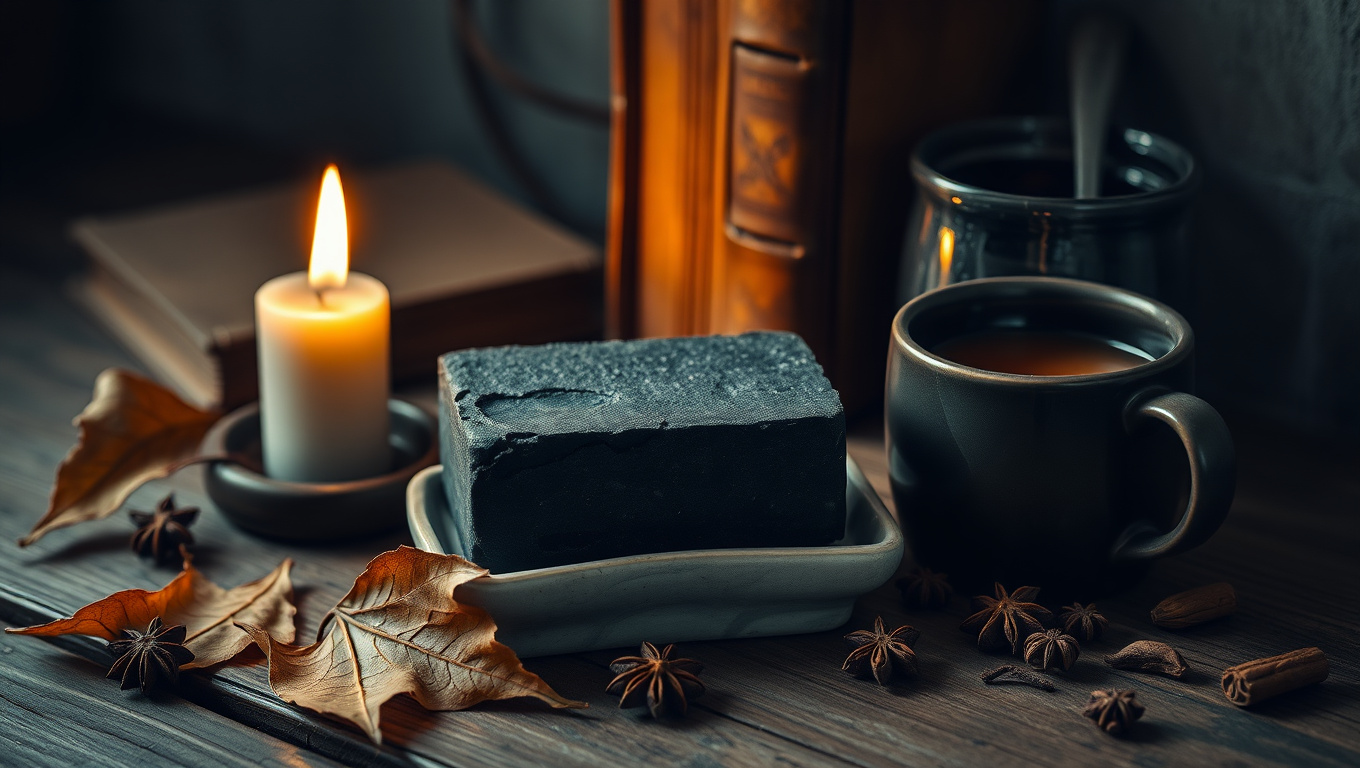
The Spellbound Grove Hollow Night Natural Handmade Witch Ritual Bar Soap is a Samhain-inspired bar that smells like everything this season holds — pumpkin cider, mulled spice, chocolate amber, and smoky sandalwood, finished with a black obsidian adornment. It is a soap that fits perfectly in a dark academia bathroom: earthy, warm, a little haunted in the best way. What follows is a slow evening routine built around that mood, using the bar as its anchor and the season as its backdrop.
Setting the Scene: The Environment Matters
Before any ritual or routine begins, the space itself has to be right. Dark Academia self-care is not about a perfectly curated Instagram flat lay. It is about atmosphere — the kind you can actually feel when you walk into a room.
Lighting
Turn off the overhead lights. Use candles if you have them, or a lamp with warm-toned bulbs. The goal is soft, amber light — the kind that makes a room feel enclosed and private, like a study in an old building where the radiators knock and the bookshelves reach the ceiling. A single candle in the bathroom is enough to change the entire feeling of a bath.
Sound
Dark Academia has its own soundtrack, and it is worth building one intentionally. Classical pieces with slow movement, rain recordings, ambient library sounds, or even a quiet folk album — anything that has weight and texture without being distracting. Music here is not background noise. It is part of the ritual. Let it be chosen with the same care as anything else.
Temperature and Texture
Warmth is essential. Have a robe or a thick towel nearby. If you are doing this in the colder months, heat the bathroom before you draw the bath. Set out whatever you plan to read or write nearby. A glass of something warm — tea, cider, whatever suits you — belongs on the edge of the tub or on the bathroom shelf. The body knows the difference between an environment that invites slowness and one that does not.
The Hollow Night Bath Ritual
A ritual soap is only as meaningful as the attention you bring to it. That sounds almost too simple, but it is true. The difference between a soap and a ritual soap is intention — not just what is in it, but how you use it.
The Hollow Night bar has a scent profile that unfolds in layers. The top notes are warm and cidery — pumpkin, mulled spice, that sweet-sharp apple quality that shows up in good autumn cooking. Underneath sits a chocolate amber note, rich and a little dark, and then the base comes through: burning sandalwood, smoky and slow. The black obsidian adornment on top is decorative, but it also gives you something to hold briefly before you set it aside — a small moment of pause before you begin.
Draw Your Bath With Intention
Fill the tub with water warm enough to be felt but not so hot it overwhelms. While it fills, light your candle. Set your drink nearby. If you have dried herbs, a small handful of something seasonal — crumbled bay leaf, a pinch of clove, a few dried apple slices — can float on the surface. This is folk practice, not formula. Use what you have and what smells right to you.
Acknowledge the Season
Before stepping in, take a breath. In folk tradition, the turning from autumn to winter has long been understood as a threshold — a time when the year begins its inward journey. You don’t need a formal spell or a script. Just a moment of acknowledgment. What are you releasing as the year draws to a close? What do you want to carry forward? This is the kind of question that belongs in a dark academia evening anyway — reflective, unhurried, honest.
Use the Soap Slowly
Work the Hollow Night bar into a lather between your hands and take a moment to actually smell it before you use it. Notice the layers. The spice comes first, then the amber, then that faint thread of smoke underneath. Handmade soaps like this one lather differently than mass-produced bars — slower, creamier, more substantial. Let it be a sensory experience rather than something you rush through.
Shadow Work and the Dark Season
Dark academia has a natural affinity with shadow work — the reflective practice of sitting with the parts of yourself that tend to stay hidden. The autumn and winter months have long been associated in folk tradition with introspection, ancestral memory, and the turning inward that deep cold encourages. A ritual bath is a good time for this, not because of any mystical requirement but because warm water, low light, and quiet genuinely create the conditions for honest thought.
If you keep a journal, consider writing by candlelight after your bath rather than before. Let the warmth of the water and the lingering scent of the soap carry you into the page. What came up in the quiet? What do you want to say to yourself before the year ends?
After the Bath: The Rest of the Ritual
A good evening routine does not end when you step out of the tub. The rest of it matters just as much, and in a dark academia context, the after-bath portion is often the most satisfying.
Skincare by Candlelight
Keep your routine simple and sensory. A natural oil or an unscented moisturizer applied slowly, by candlelight, in front of a mirror, is a different experience than rushing through the same steps under fluorescent light. The act becomes quieter and more deliberate. Witchy skincare at its most fundamental is just this: paying attention to your own body as though it deserves that attention, because it does.
The Reading Hour
Dark academia lives and dies by the book. Choose something that fits the mood — gothic fiction, folklore, natural history, poetry, a novel set in a crumbling institution full of secrets. Nothing practical, nothing that belongs to work. This hour is for the kind of reading that feeds the imagination rather than the to-do list.
Curl up somewhere warm. Robe, blanket, whatever you have. Keep the lights low. This is the core of the dark academia self-care philosophy: that feeding your inner life is not indulgent — it is necessary. Scholars in old novels always seemed to understand this. The ones who burned candles late into the night over difficult texts had a kind of dedicated relationship with their own minds that modern life doesn’t make easy to sustain.
Something Warm to Drink
Tea is the obvious choice, and it earns its reputation. A spiced black tea, a dark herbal blend, something with clove or cinnamon — these suit the Hollow Night mood well, since the soap’s own scent profile runs in that warm, autumnal direction. Drink it slowly. Don’t look at your phone.
Building a Seasonal Self-Care Practice Around the Dark Months
One of the most grounded things about seasonal living is how it relieves you of the pressure to feel the same way all year. The dark months — late October through February, roughly — have their own character, and that character includes rest, reflection, and a kind of necessary slowness. Folk traditions across many cultures have honored this quality in the season. Not every evening needs to be productive. Some evenings are for sitting with the candle and the book and the bath.
A small-batch ritual soap can serve as an anchor for a seasonal practice simply because scent is so tied to memory and mood. The combination of pumpkin cider and smoky sandalwood in Hollow Night is not accidental — it is the smell of this exact season, compressed into a bar. Using it consistently through autumn and early winter gives the scent a kind of ceremonial weight over time. The smell becomes associated with slowing down, with the ritual of the bath, with that particular quality of attention that a dark academia evening requires.
If you want to build a fuller seasonal practice, consider these small additions alongside your bath ritual:
- Keep a seasonal journal entry — just a paragraph or two — on each new or full moon through the dark months. Note what has changed. What you are noticing.
- Build a small altar or a windowsill arrangement with seasonal objects: acorns, dried leaves, a candle, a stone. It doesn’t need to be elaborate. The point is having a dedicated visual anchor for the season.
- Read folklore about the autumn and winter transition. There is genuinely fascinating material in old harvest traditions, ghost story customs, ancestor veneration practices from across many cultures. This is the kind of reading that fits perfectly in a dark academia context.
- Cook something intentional — a spiced stew, a pumpkin bread, something that makes the kitchen smell like the season. The ritual of cooking belongs alongside the ritual of bathing. Both involve heat, scent, slowness, and the body.
Why Handmade Witch Soap Belongs in This Practice
There is a quiet philosophy behind choosing a handmade witch soap over a conventional bar, and it is not really about magic in the theatrical sense. It is about craft. A small-batch soap is made by someone who chose each ingredient deliberately, who knew what cypress smells like and why it fits an autumn evening, who understood that a black obsidian adornment is a small gesture toward something older and more intentional than most commercial products ever bother with.
That care is legible in the product itself. The texture is different. The lather behaves differently. The scent is more complex and more honest, because it was built from real fragrance components rather than synthetic approximations. Using something made with that level of attention in a ritual context just makes sense — the quality of the material matches the quality of the intention.
This is also why witchy bath products sit so naturally within a dark academia aesthetic, even though the two subcultures don’t always get discussed together. Both are interested in craft, in old knowledge, in the deliberate use of sensory experience to create meaning. The dark academia scholar who lights a candle over a difficult text and the witch who draws a bath by moonlight are, in their own ways, doing the same thing: building a container for a different quality of attention.
A Few Practical Notes on Caring for Your Handmade Soap Bar
A small-batch natural soap bar is worth taking care of, especially if it is part of a regular ritual. A few simple habits will extend its life considerably.
Keep It Dry Between Uses
Handmade soaps are made without the preservatives and hardening agents that commercial bars rely on, which means they can soften and dissolve quickly if left sitting in water. Use a soap dish with good drainage — one that allows air to circulate underneath the bar. Between baths, store it somewhere dry.
Let It Cure
If you receive a fresh bar, consider letting it sit in the open air for a week or two before you use it. Cold-process soaps continue to harden and their scent can deepen slightly with a short cure period. This is not essential, but many people find it makes a difference.
Use It Intentionally
Ritual soaps are made for ritual use, which means they are at their best when you are actually paying attention. Use the bar when you have time to slow down. Notice the lather. Smell the layers of the fragrance as the warmth of the water opens them up. A bar used in this way will feel different — not magically, but practically. Attention changes how we experience things. That is simply true.
Closing the Evening
A dark academia self-care routine ends the way it begins: quietly. The candle gets snuffed. The journal closes. The last of the tea goes cold in the cup. The book gets a bookmark placed carefully between its pages. These small gestures of closure matter. They mark the end of the ritual and the beginning of rest.
There is something worth protecting in an evening like this — in the deliberate decision to be somewhere specific, doing something particular, without the noise of the rest of the world crowding in. That protection doesn’t require a formal practice or a specific belief system. It just requires choosing it, again and again, as the dark months move through.
The Hollow Night soap will be gone before spring. That is part of its character — seasonal, finite, made for this particular stretch of the year. Use it while the nights are long enough to deserve it.
Find Your Own Ritual Bar
If the mood of Hollow Night resonates — or if you are looking for something suited to a different ritual, a different season, or a different intention — Spellbound Grove makes a full range of small-batch soaps, each crafted with real botanical ingredients and genuine care for the craft. Whether you are building a full moon bath ritual, exploring shadow work through the dark months, or simply want a bar that smells like something worth slowing down for, there is likely something that fits.
You can explore the full collection of handcrafted soaps and botanical bath goods at Spellbound Grove — and if you are new to the brand, there is even a free soap sample available so you can find the right scent before committing to a full bar. Sometimes the best ritual begins with a small act of curiosity.