
What Makes a Handmade Witch Soap a True Ritual Soap?
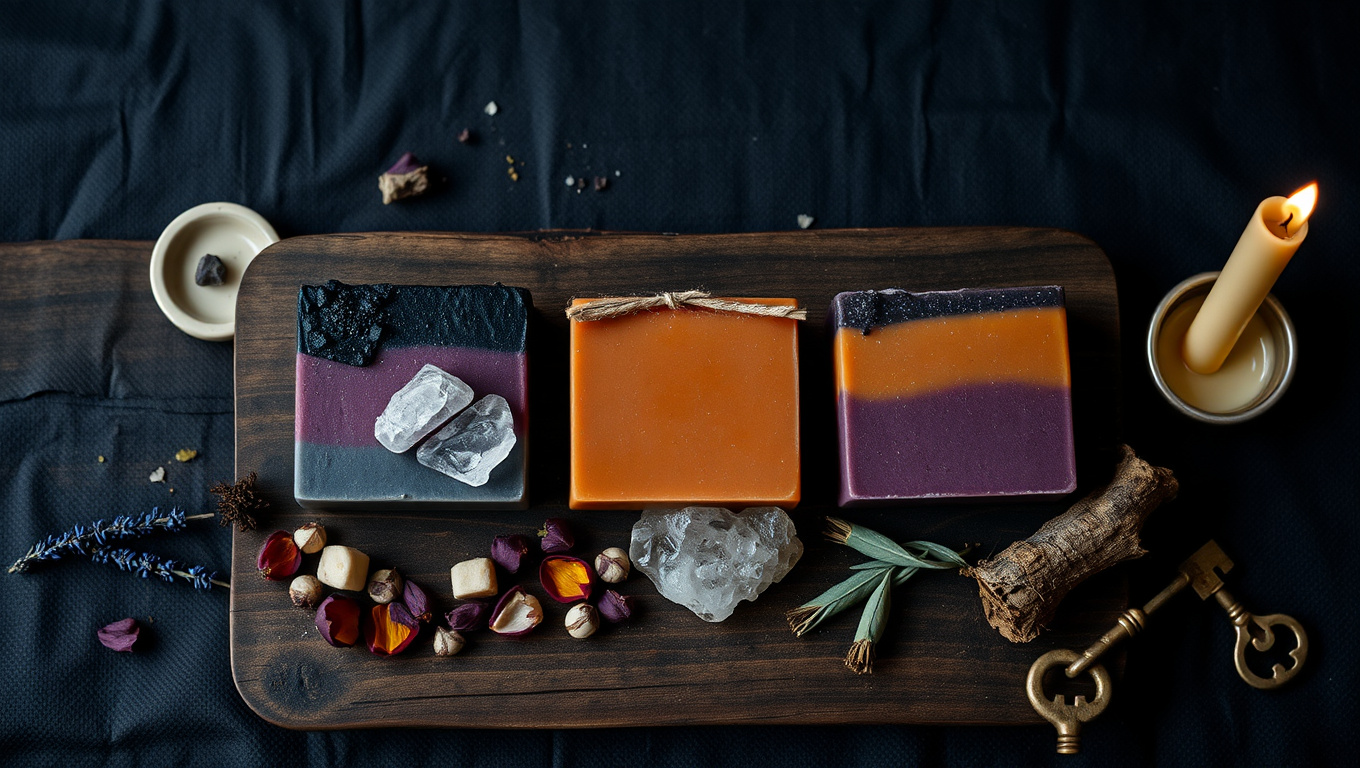
Pick up a bar of handmade witch soap and something is immediately different. The weight of it. The smell — complex, layered, not quite like anything from a box. A raw edge here, a pressed herb or a small crystal resting on top. There’s a texture to good handmade soap that commercial bars simply don’t have, because they’re made by different hands, with different intentions, and in a completely different way. But what actually separates a genuine ritual soap from a pretty bar with a witchy label slapped on it? That question is worth exploring, because the difference is real, and once you understand it, you start to feel it every time you use one.
A true handmade witch soap begins long before the pour. It starts with the choice of oils, the selection of botanicals, the fragrance notes that call up something old and grounding, and the decision to work in small batches — not because it’s trendy, but because small batches allow for care and consistency that factory production simply cannot replicate. Ritual soap is soap that takes the ordinary act of cleansing and makes it mean something. Not through magic tricks or marketing language, but through craft, quality ingredients, and the quiet power of intention.
This isn’t about superstition or theater. It’s about the very human practice of making daily life feel deliberate. And it turns out that soap — something we touch every single day — is a surprisingly powerful place to start.
The Craft: How Small-Batch Handmade Soap Is Actually Made
Most commercial soap bars aren’t really soap in the traditional sense. They’re detergent bars — made through industrial processes that strip out the glycerin (a naturally occurring byproduct of soapmaking that’s wonderfully moisturizing) and sell it separately to cosmetic companies. What’s left is a bar that gets the job done but doesn’t give much back to your skin.
Handmade soap made through the cold process method works differently. Oils and butters — often a thoughtfully chosen combination of things like olive oil, coconut oil, shea butter, or castor oil — are combined with a lye solution. Lye, or sodium hydroxide, is essential to saponification: the chemical reaction that actually turns fats into soap. No lye, no soap. That part is just chemistry. But when the process is done well, no lye remains in the finished bar. What you’re left with is a gentle, skin-kind soap that retains its natural glycerin.
Cold process soap is poured into molds and left to cure — typically for four to six weeks. That curing time lets the bar harden and the saponification process complete fully. A properly cured bar lasts longer, lathers better, and is gentler on skin than a rushed one. Small-batch soapmakers know this, and they plan accordingly. There’s no shortcut that produces the same result.
Why Small Batches Matter
When soap is made in small batches, the maker has control at every step. They can adjust a formula slightly based on the season, the humidity, the specific oils on hand that week. They can press botanicals into the top with care. They can place a crystal or an adornment at just the right moment during trace — that stage in the pour where the soap has thickened enough to hold something. None of this is possible at scale.
There’s also something that happens when one person — or a small team — makes a thing from start to finish. The attention doesn’t wander. The batch isn’t just a production run. It’s a small, complete act of making.
Ingredients That Actually Matter in a Ritual Soap
The word “natural” gets used loosely in skincare, so it’s worth being specific about what it means in a well-made handmade soap. Natural ingredients, in this context, means botanicals, plant-derived oils and butters, and fragrance materials sourced from real plants rather than synthesized entirely in a lab. It doesn’t mean every single molecule is wildcrafted or unprocessed — that’s not realistic — but it does mean the formulator is making choices rooted in the plant world rather than the petroleum-derived synthetic world.
Oils and Butters: The Foundation
Every good soap starts with its base oils. Olive oil is a classic — it produces a hard, conditioning bar with a gentle lather. Coconut oil adds cleansing power and those satisfying big bubbles. Shea butter brings a silkiness to the finished bar. Castor oil, even in small amounts, helps bind the lather and makes it feel richer. The ratio of these oils determines the character of the final soap: how hard it is, how long it lasts in the shower, how much it lathers, how it feels on skin.
A thoughtful soapmaker doesn’t just grab whatever’s available. They’re thinking about the balance — the interplay between cleansing and conditioning, hardness and lather. That balance is part of the craft.
Botanicals, Herbs, and the Folk Tradition Behind Them
This is where handmade witch soap starts to diverge most clearly from ordinary natural soap bars. The choice of botanicals — both for their scent and their symbolic associations — is where the ritual dimension enters.
Lavender, for instance, has been used in folk traditions across Europe for centuries in sachets, baths, and linen rinses. Its scent is familiar and softly floral, and many people find it has a quieting quality that makes it a natural choice for evening rituals. Cedarwood carries a deep, resinous warmth and has a long history in folk practice as a grounding scent. Patchouli — earthy, a little dark, polarizing in the best way — has been associated with both the countercultural and the magical for generations. Cypress, with its green, slightly astringent sharpness, has been present in Mediterranean folk tradition as a symbol of the liminal, the in-between.
Myrrh and frankincense have been burned in sacred spaces for thousands of years across multiple cultures — their resinous, smoky-sweet quality makes them feel ancient and grounding. Clary sage has a distinctly herbaceous, slightly honeyed scent that’s been part of the European herb garden tradition for a long time. These aren’t invented associations or modern marketing. They’re rooted in actual folk history, in the way plants have been used and understood by people across time.
The best ritual soap formulas draw on this tradition thoughtfully, choosing botanicals that work together not just chemically but symbolically — building a scent story that means something, that connects the person using the soap to something older and quieter than their daily routine.
Crystals and Adornments: Decoration or Something More?
Many handmade witch soaps include a crystal or stone adornment pressed into the top of the bar. Black obsidian. Clear quartz. Amethyst. Rose quartz. Tiger’s eye. These aren’t just decorative, though they are undeniably beautiful. In folk and metaphysical tradition, each stone carries associations that have accumulated over centuries of use and storytelling. Obsidian is associated with protection and clarity. Amethyst with intuition and quiet power. Rose quartz with love and softness. Clear quartz with amplification and intention.
Whether or not you hold any personal belief about the properties of crystals, the act of choosing one for a bar of soap — of pairing it with specific botanicals and a specific intention — is a meaningful gesture. It asks the person using the soap to think about what they’re bringing to the act of cleansing. That mindfulness, that attention, is at the heart of what ritual self-care actually is.
What Makes Soap a “Ritual Soap”? The Question of Intention
Here is where things get a little harder to pin down, and also more interesting. Intention is not an ingredient you can list on a label. It’s not measurable. But anyone who has ever used something made with genuine care — a meal cooked by someone who loved the process, a garment sewn slowly and well — knows that it registers somewhere. The thing feels different.
Ritual soap is made with a specific purpose held in mind. That purpose might be seasonal — a Samhain bar meant to mark the turning of the dark months. It might be elemental — a soap built around water and moon associations for a full moon bath ritual. It might be devotional — crafted in honor of a specific goddess or archetype, with botanicals chosen to align with that figure’s traditional associations. The Hecate mythology, for instance, is rich with associations: crossroads, the dark moon, cypress trees, dogs, torches, keys. A soap made for Hecate would naturally reach for those elements.
Spellbound Grove’s Goddess Hecate Natural Handmade Witch Ritual Bar Soap brings together myrrh, cypress, lavender, jasmine, amber, and rose — and includes an antique key adornment that nods directly to one of Hecate’s oldest symbols. That’s not decoration for decoration’s sake. It’s a bar built around a coherent mythological and aromatic story, where every choice reinforces every other choice.
Similarly, the Dark Alchemy Natural Witch Ritual Bar Soap layers myrrh, cypress, lavender, jasmine, rose, patchouli, cinnamon, black pepper, and clear quartz into something that feels genuinely alchemical — warm and cool at once, floral and earthy, familiar and a little wild. A bar like that takes time to understand. You use it and notice something different each time.
A Simple Ritual: Building a Meaningful Bath Practice Around Your Soap
You don’t need a full altar setup or an elaborate ceremony to make a bath feel like a ritual. Most of the power is in the slowing down — in making a series of small, deliberate choices that signal to yourself that this time is different from the rest of the day.
Before You Step In
Take a moment to choose your soap with intention. If you’ve had a hard week and want to let something go, reach for something grounding — cedarwood, vetiver, sage, firewood. If you want to feel open and a little soft, something with rose, ylang ylang, or vanilla might suit you better. The choice doesn’t have to be complicated. Just make it consciously.
Light a candle if you have one. Not for ambiance in the Instagram sense, but because candlelight changes the quality of attention in a room. It signals: this is different from the overhead-light version of my life.
During the Bath
Hold the soap for a moment before you use it. Notice the scent. Really smell it — not as a quick check, but slowly, the way you’d smell something in a garden. Let the layers come forward: the first sharp note, then the deeper, warmer one underneath. If there’s a crystal on the bar, let it rest in your palm for a second before you set it aside.
Lather slowly. Pay attention to the texture of the lather, to the warmth of the water, to the particular way this soap smells when it’s wet and active. This is sensory attention, which is a kind of presence. And presence is what separates a ritual from a routine.
If you want to make it more intentional, you can hold a simple thought while you wash — something you want to release, something you want to call in, something you simply want to be grateful for. You don’t need formal words. The thought is enough.
After: Caring for Your Handmade Soap Bar
A well-made handmade soap bar will last a long time if you take care of it. The main thing to know: let it dry between uses. Handmade soaps are higher in glycerin than commercial bars, which means they’ll absorb moisture and soften quickly if they sit in standing water. A wooden soap dish with drainage, a small soap-saving bag, or even a spare dish with a raised surface will keep your bar firm and long-lasting. Store unused bars somewhere cool and dry, out of direct sun. They’ll actually continue to cure and improve over time.
If your bar has a crystal or stone adornment, remove it before your first use and keep it somewhere meaningful — on your altar, a windowsill, or a small dish on your nightstand. It’s a little continuation of the ritual outside the bath.
Seasonal Ritual Soaps: Reading the Wheel of the Year in a Bar
One of the most beautiful things about working with a small-batch ritual soap maker is the possibility of seasonal soaps — bars formulated specifically for a time of year, a sabbat, a turning point in the calendar. The scent notes of autumn are different from those of late winter, and a maker who’s paying attention will reflect that.
Spellbound Grove’s Hollow Night Natural Handmade Witch Ritual Bar Soap is a good example of this done right. Its notes — pumpkin cider, mulled cider, chocolate amber, burning sandalwood — are the smell of Samhain in a bar. Cozy and smoky and a little dark, with a black obsidian adornment that fits the aesthetic of the season perfectly. Using a soap like that during the days around the end of October and into November isn’t just pleasant. It connects the act of bathing to the season, to the old calendar, to the sense that time is turning and worth marking.
Seasonal ritual soap is one of the simplest, most accessible ways to align daily life with the wheel of the year — no elaborate practice required. Just a bar that smells like the season, used with attention.
What Witchy Skincare Actually Means
The phrase “witchy skincare” gets thrown around a lot, and it can start to feel hollow. But stripped of the marketing layer, it means something real: it means choosing products made from plants, made by hand, made with knowledge and care for both the craft and the person using the craft. It means taking the daily ritual of washing your face or stepping into a bath and treating it as something worth being present for. It means caring about what goes on your skin and where it came from.
That’s not a grand claim. It’s just a preference for the made thing over the manufactured thing, for the plant over the synthetic, for the slow over the fast. It’s a preference that has a long tradition behind it — herbalists, apothecaries, wise women making salves and washes from what grew in their gardens — and a very natural home in modern life for anyone who’s tired of products that feel disposable.
A real handmade witch soap carries that tradition forward in something small enough to hold in your hand.
Finding the Right Handmade Witch Soap for Your Practice
There’s no single right answer to which ritual soap is yours. It depends on the season, your practice, the scents that feel like home to you, the archetypes and symbols you’re drawn to. Someone drawn to water and moon symbolism might reach for something with jasmine and blackberry and blue stone. Someone working through something difficult might want the grounding depth of cedarwood, vetiver, and sage. Someone stepping into a self-love ritual might want the warm, floral sweetness of ylang ylang, rose, and vanilla.
The best way to find what resonates is to start small — a sample, a single bar, something that speaks to where you are right now. Notice how it smells when you first open it. Notice how the lather feels. Notice whether you reach for it again, and again, and whether the ritual starts to build itself around the bar almost naturally. That’s how you know you’ve found a good one.
If you’re not sure where to begin, Spellbound Grove offers a Build Your Sample Pack that lets you choose two sample-sized bars from across their ritual soap line — a low-commitment way to try a couple of scent families before committing to a full bar. There’s even a free soap sample available for first-time visitors, which is a genuinely generous way to get to know the lather before you invest.
The Honest Answer to What Makes It Real
So: what actually makes a handmade witch soap a true ritual soap? The honest answer is that it’s a combination of things, none of which can be faked for long. Real ingredients. A real process — cold process, small batch, properly cured. Botanicals chosen for their scent story and their folk associations, not just for their label appeal. Adornments chosen with coherence and meaning. And underneath all of it, the intention of the maker — the fact that someone thought carefully about what this bar is for and made every choice in service of that.
You feel the difference the moment you use it. And once you’ve felt it, the alternative starts to feel like settling.
If you’re ready to find a bar that suits your practice, your season, or simply your sense of what a good slow bath deserves, explore the handcrafted ritual soaps and botanical bath goods at Spellbound Grove. Every bar is made in small batches, with real ingredients, and with the kind of care that shows.