
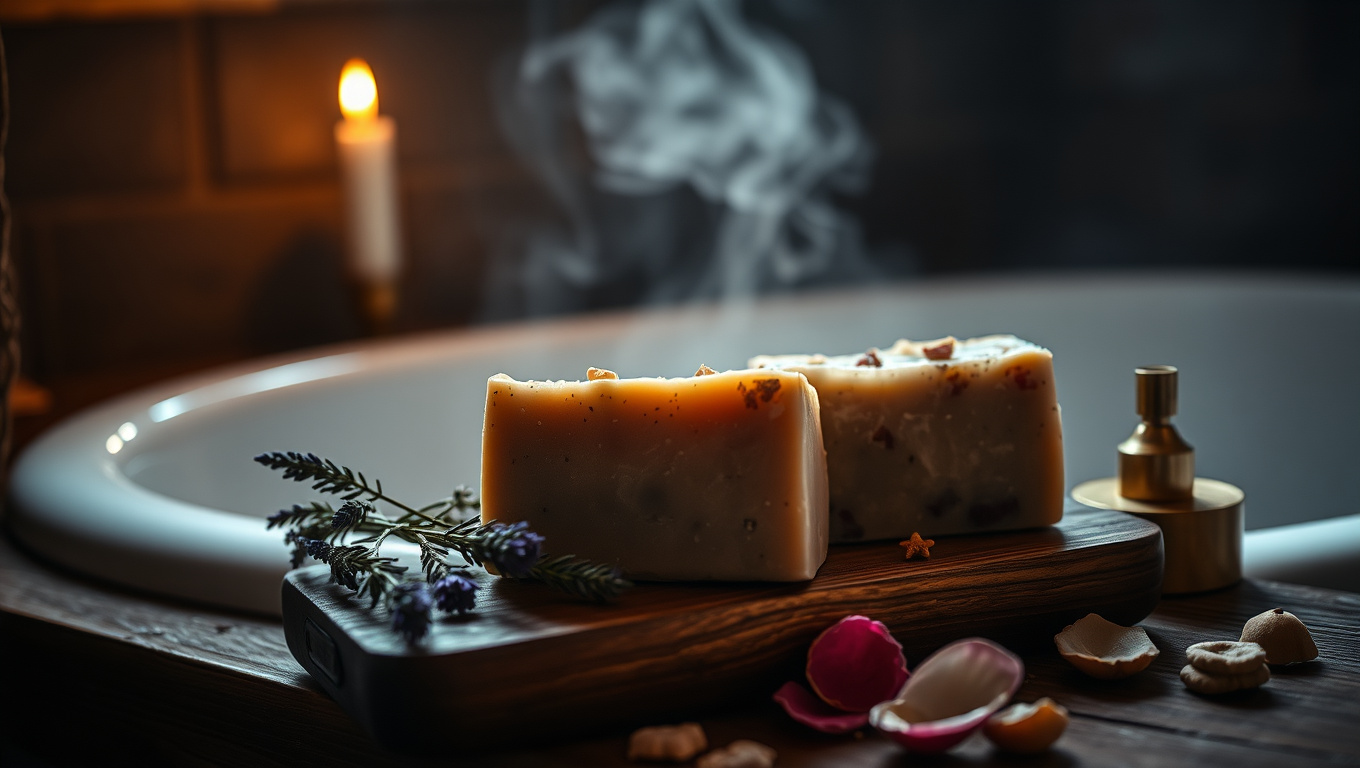
A Witchy Bath Routine Built Around Handmade Witch Soap
There’s a particular kind of magic in a bath taken slowly. Not the rushed rinse before bed, but the one where you actually light a candle, let the steam rise, and give yourself permission to just be still for a little while. If you’ve ever felt drawn to building a more intentional bath ritual — something that feels a little enchanted without requiring an elaborate setup — you’re not alone. The good news is that a meaningful witchy bath routine doesn’t demand a list of supplies a mile long, a perfectly staged altar, or hours of preparation. What it asks for is simple: a little intention, the right handmade witch soap, and a willingness to treat your bath as something more than a chore.
The practice of ritual bathing has roots in cultures all over the world — from ancient Roman bathhouses to Japanese ofuro, from European folk herb baths to the sacred bathing traditions of indigenous peoples across multiple continents. People have always understood that water does something to us. It shifts the mood, quiets the noise, marks a transition. We’ve just gotten a bit out of the habit of honoring that. Building a witchy bath routine is, in a lot of ways, simply returning to something very old: the idea that washing yourself can be a conscious act, not just a hygienic one.
This guide is for the person who wants to bring more ritual into their daily life without overcomplicating it. We’ll look at what actually matters when setting up a bath practice, how botanical soaps connect to folk tradition and sensory experience, how to structure your ritual around the season or the moon if that appeals to you, and how to keep it all simple enough that you’ll actually do it.
Start With Intention, Not Instagram
The first thing that trips people up when they try to build a ritual bath practice is the pressure to make it look a certain way. Floating flower petals, seventeen crystals arranged just so, a perfectly coordinated color palette. That can be lovely if it genuinely brings you joy, but it’s not the point — and it’s not required.
Intention is quieter than aesthetics. It’s just the act of deciding, before you step into the water, what this bath is for. Are you washing off a hard day? Marking the end of a difficult week? Moving through a seasonal transition? Spending time with yourself after too long spent taking care of everyone else? Any of those is enough. The ritual isn’t in the props. It’s in the pause — the moment you consciously choose to step away from the noise and into something slower.
One of the simplest ways to anchor that intention is through scent. Our sense of smell has a long, well-documented connection to memory and mood, and working with botanically scented soaps is one of the most immediate ways to signal to your nervous system that something has shifted. This is part of why a good ritual soap matters. When you reach for the same bar as part of an intentional practice, the scent itself starts to carry meaning over time.
Choosing Your Focus Before You Draw the Bath
Take thirty seconds before you run the water. That’s all. Ask yourself: what is this bath for? You don’t need to write it down or speak it aloud unless you want to. Just know it. That single act of conscious choosing is what transforms an ordinary bath into a ritual one.
Some people find it helps to have a loose intention tied to the time of year, or the lunar cycle, or whatever is happening in their inner life. Shadow work, release, renewal, rest, love — these are themes you can hold lightly while you bathe, without any pressure to perform them.
How to Choose a Handmade Witch Soap for Your Practice
Not all soap is created equal, and if you’ve ever used a truly good handmade bar — the kind made in small batches with real oils and botanical ingredients — you’ll know the difference immediately. Mass-produced soap often strips the skin of its natural moisture. Small-batch, natural handmade soap is a different experience altogether: a richer lather, scents that come from real botanical sources rather than synthetic fragrance alone, and a bar that actually feels good to hold in your hands.
When you’re choosing a ritual soap, let the scent profile be your first guide. Think about what resonates with your intention. Earthy, resinous notes like myrrh, cedarwood, and patchouli tend to feel grounding. Floral notes like rose, jasmine, and ylang ylang carry associations with softness, love, and opening. Smoky, dark notes like sandalwood and black pepper feel potent and wild. Bright, citrus-forward scents like bergamot and sweet orange feel cleansing and energizing.
Spellbound Grove’s small-batch ritual soaps are crafted with exactly this kind of layered intention. Each bar is built around a specific mood or archetype, and the scent profiles are genuinely complex — not a single note tossed in, but blended combinations that shift as the bar warms in your hands.
For a deep, grounding bath — the kind you draw when you need to feel rooted after a period of uncertainty or restlessness — Dark Alchemy is a remarkable choice. It carries myrrh, cypress, lavender, jasmine, rose, patchouli, cinnamon, and black pepper, with a clear quartz adornment on top. It smells like a ritual already in progress — dark and warm and quietly powerful. Ideal for moonlit baths or those nights when you genuinely need to call yourself back to yourself.
If your practice leans toward honoring feminine cycles, lunar energy, or something more ethereal, the Triple Moon Goddess bar opens into lavender, frankincense, myrrh, and vanilla — a light, powdery floral scent with real depth underneath. It’s described as ideal for moon baths and spiritual cleansings, and the amethyst adornment makes it genuinely beautiful to hold.
The Role of Crystals and Botanicals in Ritual Soap
You’ll notice that many intentional soap makers — Spellbound Grove included — embed small crystals or stones into the top of their bars. This isn’t purely decorative, though it is beautiful. Crystals have been used in folk practice and esoteric traditions for centuries, associated with specific energies or intentions depending on the stone. Whether you work with crystal energy consciously or simply appreciate the symbolism, having a piece of amethyst, clear quartz, black obsidian, or rose quartz resting on top of your soap bar is a small, tangible reminder of the intention you’ve set.
The botanicals in the soap itself — the essential oils and plant-based fragrance notes — carry their own long histories. Lavender has been used in folk practice for calm and clarity for centuries. Myrrh appears in ancient ritual contexts across multiple cultures, valued for its resinous, sacred scent. Patchouli has roots in both South Asian tradition and the Western folk herbalism revival of the last century. None of these are modern marketing inventions. They’re plants with long, genuine relationships with human ceremony and daily life.
Building a Full Moon Bath Ritual That Actually Fits Your Life
The full moon is one of the most widely observed points in the lunar cycle across folk traditions worldwide. It’s associated with culmination, clarity, and release — a good time to acknowledge what you’ve been carrying and consciously choose what to let go of. A full moon bath ritual doesn’t need to be elaborate. Here’s a simple structure you can adapt however feels right to you.
A Simple Full Moon Bath Ritual
- Set your space. Light a candle or two — beeswax, soy, or whatever you have. Dim the overhead lights if you can. Open a window slightly if the weather permits, so the night air can come in. You don’t need more than this.
- Choose your soap with intention. For a full moon bath, something with lunar or water energy feels fitting. The Moonlit Cauldron bar — with its notes of blackberry, chocolate amber, and Roman chamomile, adorned with white howlite — is exactly the kind of soap made for this kind of evening. It smells rich and grounding while carrying a soft, dark sweetness.
- Before you get in, pause. Hold the soap in your hands for a moment. Notice the weight of it, the scent. Name, quietly or in your head, one thing you’re releasing tonight. It can be a habit, a worry, a story you’ve been telling yourself, a week that was harder than it should have been.
- Bathe slowly. This is not a task to complete. Let yourself soak if you have a tub. If you’re showering, let the water run a little longer than usual. Notice the lather, the scent, the warmth. This is the actual ritual. The soap, the water, the slowness.
- After you dry off. Some people like to journal briefly. Some light another candle and sit quietly. Some simply go to bed early with intention. Any of these closes the ritual nicely.
That’s it. No elaborate spellwork required. The power is in the pause, the intention, and the repetition over time.
Seasonal Bathing and the Craft of Small-Batch Soap
One of the loveliest aspects of working with small-batch, seasonal ritual soaps is that they follow the rhythm of the year. The herbs and scents associated with autumn are different from those of midsummer or deep winter, and there’s something genuinely satisfying about letting your bath practice shift with the seasons.
Autumn, with its associations with harvest, thinning veils, and the turning inward of energy, calls for warmer, earthier, spicier scents. Spellbound Grove makes a Hollow Night bar that captures this season completely — pumpkin cider, mulled cider, chocolate amber, and burning sandalwood, with a black obsidian adornment. It smells like the specific magic of late October: cozy and smoky and a little mysterious. It’s the kind of bar you save for a bath on the night the clocks change, or the first genuinely cold evening of the season.
Spring and summer might call for something brighter — bergamot, honeysuckle, frankincense, like the Hex and Honeysuckle bar, with its citrine adornment and its feel of wild energy and open skies. The point is not to follow rules rigidly, but to notice how the seasons affect what you want to surround yourself with, and to let your bath practice reflect that.
What Makes Small-Batch Soap Different
Small-batch handcrafted soap is made in quantities small enough that the maker can actually pay attention to each pour. The oils are chosen carefully. The scent blends are developed with a specific mood or intention in mind, not just mass appeal. The bars often cure for weeks before they’re sold, which results in a harder, longer-lasting bar with a better lather. You can feel the difference. It’s not a marketing claim — it’s just the nature of careful making versus industrial production.
When a soap is made with genuine intention — when the person making it is thinking about the person who will eventually use it — that quality comes through in the experience of using it. This is part of why witchy bath products made by small, independent makers have found such a devoted following. People can tell the difference between something made with care and something made for volume.
Shadow Work, Self-Love, and Other Ritual Intentions
Not every bath is about the full moon or the turning seasons. Some of the most powerful ritual baths are the quieter, more personal ones: the bath you take after a grief, the one that marks the end of a relationship, the one you draw when you’ve been hard on yourself for too long and you simply need to be gentle.
Shadow work — the practice of sitting with the parts of yourself you’d rather not look at, the difficult emotions and old patterns — has become more widely discussed in recent years. A bath can be a surprisingly good container for this kind of inner work. Water has long been associated in folklore with the subconscious, with depth, with what lies beneath the surface. Working with a soap like Shadow and Sage — built around vanilla, cedarwood, vetiver, firewood, and black obsidian — for a pre-journaling or pre-divination ritual creates a sensory anchor for that kind of introspective work. The scent of firewood and cedarwood is grounding in a way that’s hard to articulate but easy to feel.
For self-love rituals, the Love Spell bar — ylang ylang, sweet orange, rose, jasmine, vanilla, and rose quartz — smells genuinely beautiful. Warm and floral with a softness that invites you to slow down and just appreciate being in your own skin for a while. It doesn’t require a romantic occasion. It’s just a nice thing to do for yourself.
Keeping Your Handmade Witch Soap in Good Condition
A quick practical note: handmade natural soap bars, because they’re made with real oils rather than synthetic detergents, benefit from a little care between uses. Let your bar dry out fully between baths. A wooden soap dish with slats, or a dish that drains well, will extend the life of the bar significantly. Keep it away from direct streams of water when it’s not in use. Store unused bars in a cool, dry place — many people keep them in drawers as a natural scent for linens, which is a lovely small pleasure in itself.
If you’re not sure where to begin with ritual soap, Spellbound Grove offers a Build Your Sample Pack where you can choose two sample-sized bars from the collection to try before committing to a full bar. There’s also a free soap sample available — one per customer — if you just want a small taste of the lather before deciding. It’s a genuinely good way to find the scent that resonates with you before you invest in a full bar for your practice.
A Handmade Witch Soap Practice That Grows With You
The most sustainable ritual practice is the one you’ll actually return to. That means keeping it simple enough to do on an ordinary Tuesday, not just on nights when everything is perfectly aligned and you have two uninterrupted hours. A single candle, a bar of soap chosen with intention, five minutes of genuine stillness in the water — that’s a ritual. It counts.
Over time, if you stay consistent, something interesting happens. The scent of a particular soap starts to carry memory and meaning. The act of drawing a bath becomes its own cue for the mind to shift gears. The ritual becomes woven into the fabric of how you care for yourself, not as an occasional indulgence but as a regular, quiet practice. That’s the real magic of it. Not the crystals or the moon phase or the botanicals — though all of those add their own texture and depth — but the steady accumulation of small, intentional moments.
Start where you are. Use what you have. Add one thing that feels genuinely good, and build from there.
If you’re looking for a handmade witch soap made with real care — small-batch, botanically inspired, built around specific intentions and scent profiles that go deeper than the generic — take a quiet moment to explore the ritual soaps and botanical bath goods at Spellbound Grove. There’s a bar for every kind of bath, and every kind of magic you happen to be working with right now.