
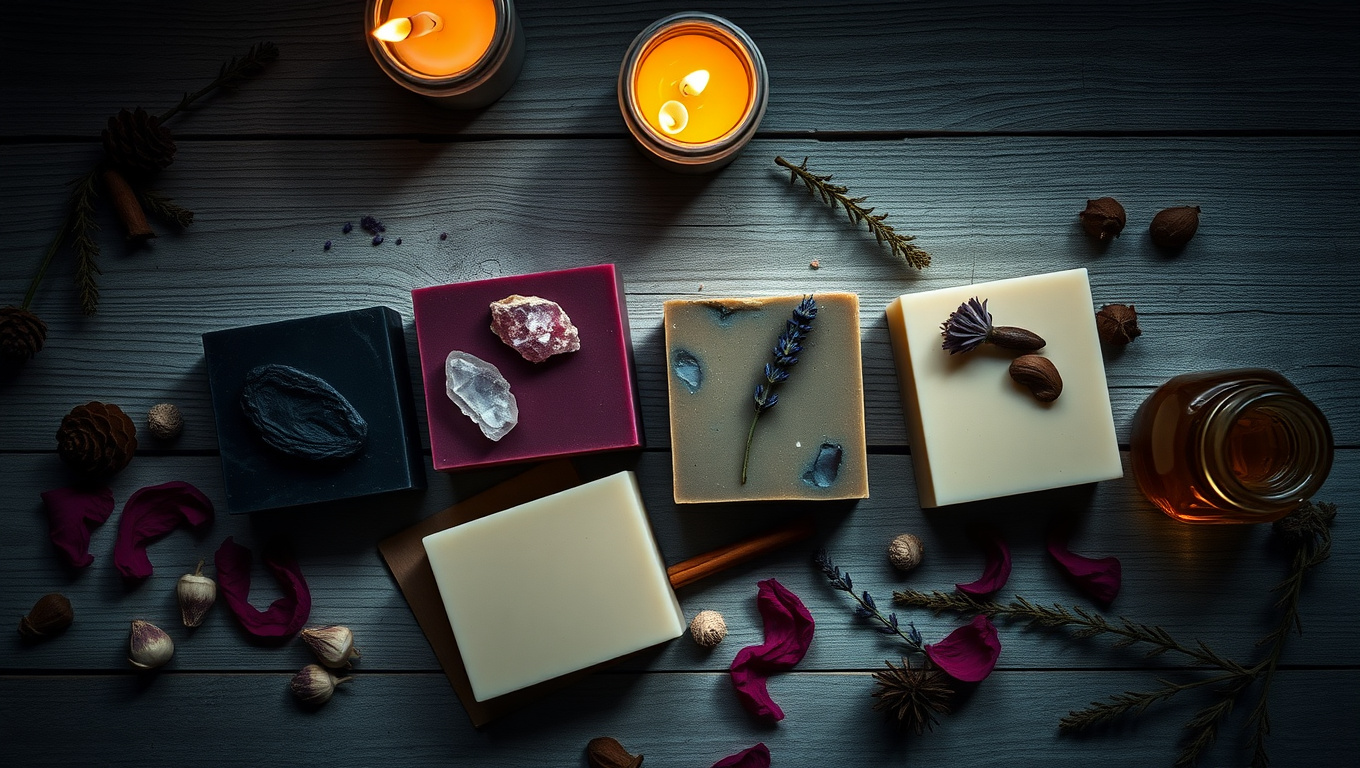
Why Your Handmade Witch Soap Should Change with the Seasons
There’s a bar of soap sitting on the edge of my bath right now that smells like firewood and vanilla. It’s the wrong time of year to reach for the bright bergamot one. I know this the same way I know to switch my blankets or eat something warm and rooty when the light starts to shift. Scent is seasonal. Ritual is seasonal. And if you practice any form of intentional living — whether you call it witchcraft, folk herbalism, or simply paying attention — then the idea of a seasonal handmade witch soap rotation probably feels more like common sense than novelty.
A soap rotation isn’t a complicated system. It just means having a small, thoughtful collection of natural soap bars that shift throughout the year the same way your wardrobe or your altar might. Different botanicals, different scent profiles, different intentions baked into the craft. When soap is made with real ingredients — fixed oils, plant-derived butters, essential oils, dried herbs, and mineral pigments — it carries the character of those ingredients. A bar heavy in patchouli and cedarwood feels like autumn even before you’ve lathered it. A bar with bergamot and honeysuckle practically pulls you toward the open window.
This guide is for anyone who wants to be a little more deliberate about the handmade soap they use day to day. We’ll walk through each season, talk about the botanicals and scent families that belong to each one, touch on folk associations and ritual context where it’s genuinely relevant, and give you some practical ways to build a small, beautiful rotation that actually gets used.
Spring: Awakening, Green Scents, and the Return of Light
Spring is the season of emergence. The ground softens. Things that went dormant come back. It makes sense, then, that the soaps suited to spring tend to be lighter, fresher, and a little more floral — not saccharine sweet, but alive in a way that heavier, resinous winter blends aren’t.
Botanicals and Scents That Belong to Spring
Florals are the obvious starting point: lavender, jasmine, rose, and honeysuckle have all been traditionally associated with the blossoming months, both in folk practice and in perfumery. They’re not just pretty — they bring a lift to a morning wash that a thick, smoky blend simply can’t replicate.
Citrus top notes work beautifully in spring soap too. Bergamot in particular has a peculiar quality — it’s citrusy but slightly herbal, almost bittersweet, with enough complexity to keep it from being one-note. In small-batch soapmaking, bergamot pairs naturally with florals and light spices like cinnamon leaf, creating something that smells like a garden just after rain.
Spring is also traditionally a time of intention-setting in many folk and seasonal practices. Beltane, May Day, the turn toward light — these are moments when people have historically made offerings, performed cleansings, and set new intentions. A ritual soap used in a spring bath or shower can become part of that practice: a way to mark the shift, wash away the heaviness of winter, and greet what’s coming.
For spring, Hex and Honeysuckle is worth reaching for. Its blend of bergamot, honeysuckle, frankincense, and cinnamon leaf — finished with a piece of citrine — is exactly the kind of scent that feels like a door being opened after a long time shut. The citrine adornment adds a small ritual touchpoint: a reminder that this bar was made with something more than efficiency in mind.
A Simple Spring Ritual Soap Practice
On the first morning of the new moon in spring, use your spring ritual soap intentionally. Before stepping in, take a breath and name something you want to call toward you this season — not a demand, just a direction. Let the lather do what good soap does: cleanse, soften, leave the skin feeling different than when you stepped in. That’s enough. Small ritual doesn’t need to be elaborate to feel real.
Summer: Heat, Abundance, and Bold Scent Pairings
Summer soap has to walk a line. The season is full and warm and sometimes overwhelming — overly heavy scents can feel suffocating when the air is already thick. But summer also loves abundance, richness, a certain boldness. The best summer soaps tend to be floral-forward but grounded, or citrus-bright with depth underneath.
What to Look for in a Summer Ritual Soap
Ylang ylang is a classic summer botanical — deeply floral, slightly waxy, warm without being heavy. It has a long history in traditional perfumery and in folk use across various cultures, often associated with warmth, attraction, and sensory pleasure. Paired with sweet orange or jasmine, it creates a scent profile that is full without tipping into excess.
Rose is another summer staple. Not the synthetic rose you find in drug store products, but the real thing — earthy and complex, with a depth that belies its delicate reputation. In soapmaking, rose is often paired with vanilla or amber to keep it grounded, which prevents it from reading as purely feminine or old-fashioned.
Summer is also a natural time for love and self-love rituals in folk tradition — Midsummer has long been associated with magic around attraction, joy, and the heart. The Love Spell ritual bar, with its blend of ylang ylang, sweet orange, rose, jasmine, and vanilla finished with a rose quartz crystal, fits beautifully into a summer soap rotation. It’s warm, floral, and a little luxurious — the kind of bar you reach for when you want the bath to feel like something more than hygiene.
Full Moon Bath Rituals in Summer
The long daylight hours of summer mean the full moon often rises into a still-twilit sky — there’s something about summer full moons that feels especially dramatic. A full moon bath ritual doesn’t require much: draw the bath, light a candle, use your ritual soap with some intention. The full moon has been associated in folk practice across many cultures with completion, clarity, and release. Using a handmade witch soap chosen specifically for the season gives the ritual a sensory anchor — a smell that you’ll associate with that particular window of time, that particular version of yourself.
Autumn: The Season That Was Made for Ritual Soap
Honestly? Autumn and handmade witch soap were made for each other. The season pulls toward warmth, spice, smoke, and depth — exactly the profile that natural soapmakers tend to love working with. Resins like myrrh and frankincense, warming spices like clove and cinnamon, woods like cedar and sandalwood, dark fruits like blackberry — all of these feel like autumn in the body, not just the nose.
The Folk Depth of Autumn Scent
Autumn has long been the season most associated with the thinning of the veil between worlds in various folk traditions — Samhain in Celtic custom, Día de los Muertos in Mexican tradition, and similar observances across many cultures. These traditions share a common thread: autumn is a time to remember, release, and mark transitions. It’s no surprise that the scents associated with this season — resins, smoke, dark fruit, earth — tend to feel more serious, more grounded than summer’s warmth or spring’s freshness.
For a Samhain or deep-autumn seasonal soap, Hollow Night is one of the most evocative options in Spellbound Grove’s lineup. It’s a Samhain-inspired bar built around pumpkin cider, mulled cider, chocolate amber, and smoky sandalwood, and it comes adorned with a piece of black obsidian. The scent is cozy in the way a bonfire is cozy — warm but wild, comforting but with an edge. It smells like the turn of the season smells.
For those who prefer their autumn soap a little more herbal and earthy, Shadow and Sage brings vanilla, cedarwood, vetiver, and firewood into a bar that feels designed for shadow work, journaling, and the quieter rituals of the dark months. The black obsidian adornment echoes that intention. It’s a soap for sitting with yourself honestly.
Building an Autumn Soap Ritual Around Samhain
The week surrounding Samhain — roughly the last few days of October and the first of November — is a natural time to perform a seasonal cleansing ritual. Draw a bath as the sun goes down. Use a ritual soap chosen for the season. Let the warmth of the water and the scent of the bar do what warm water and good scent do: slow the breath, ease the shoulders, mark the passage of time. You don’t need a script for this. The act itself is the ritual.
Winter: Rest, Resin, and the Long Dark
Winter soap should feel like shelter. Deep, resinous, warming — the kind of scent you want to carry into a cold morning or settle into at the end of a dark afternoon. The botanicals that thrive in winter blends tend to be ancient ones: myrrh, cypress, patchouli, cedarwood. Scents that have been used in ceremonial and domestic contexts across many cultures for centuries.
Resins and Woods: The Winter Botanical Palette
Myrrh has one of the longest histories of any aromatic material. Used in incense, in folk practice, and in traditional beauty preparations across the ancient world, it has a warm, slightly smoky, resinous quality that reads as deep and serious rather than sweet. Cypress is similarly old — its association with transition, the underworld, and the passage of time appears in various Mediterranean traditions. Together, myrrh and cypress form the backbone of some of the most complex and beautiful natural soap scents.
Patchouli is a divisive one — people tend to feel strongly in one direction. But in a balanced formula, patchouli provides an earthy, slightly fermented depth that anchors brighter notes and adds longevity to a scent. It has been used in folk and ceremonial contexts across South and Southeast Asia for generations, and in Western folk herbalism it became associated with intuition and the shadow self.
For a winter ritual soap rotation, Dark Alchemy is a natural fit. It layers myrrh, cypress, lavender, jasmine, rose, patchouli, cinnamon, and black pepper into something surprisingly complex — warm and dark but never suffocating, with the cinnamon and pepper providing just enough brightness to keep it from disappearing entirely into shadow. A piece of clear quartz rests on top of each bar.
For a winter bar with a different character — one that leans more toward the moonlit, meditative quality of the long nights — the Triple Moon Goddess bar offers lavender, frankincense, myrrh, and vanilla, with an amethyst adornment. The scent is described as a light fragrant blend of flowers and powder — softer than Dark Alchemy, but still rooted in winter’s resinous depth. It’s a good bar for moon rituals, quiet evenings, or anyone who finds winter a time for spiritual practice rather than hibernation.
Winter Ritual Soap Practice: The Long Bath
Winter is the season that most naturally invites the long bath. The kind where you light a candle, let the hot water run a little longer than you should, and don’t feel any pressure to be doing something else. Use your winter ritual soap slowly. Notice the scent as it shifts from cold bar to warm lather. Notice what loosens in you when you’re warm and the room smells like something ancient and good. That’s not mysticism — it’s just what happens when you give yourself an unhurried moment and a soap worth paying attention to.
How to Actually Build Your Rotation: Practical Notes
A soap rotation doesn’t mean buying twelve bars at once and watching half of them go soft in a drawer. Here’s how to approach it practically.
Start Small
Two or three bars is a rotation. One for daily use, one for ritual baths or special evenings, and maybe a sample or two from the next season waiting in the wings. Spellbound Grove’s Build Your Sample Pack is a genuinely useful way to explore scent families before committing to a full bar — you choose two sample-sized bars from the available lineup, which lets you test whether a winter resin blend works for you before you’re halfway through it in March.
There’s also a free soap sample available — one per customer, in your choice of scent and formula. It’s a low-stakes way to find out whether you’re a patchouli person or a bergamot person before you know which season you’re shopping for.
Store Your Bars Properly
Handmade natural soap is different from commercial soap. It doesn’t contain synthetic hardeners or preservatives, which means it needs a little care in storage. Keep bars you’re not using in a cool, dry place — a linen closet shelf works well. A wooden soap dish or a slatted soap tray allows air to circulate and the bar to dry between uses, which dramatically extends its life. Avoid leaving your bar sitting in pooled water. That’s the main thing.
Let Scent Guide You, Not Just the Calendar
The wheel of the year gives us a rough framework, but your body knows things too. If it’s technically spring and you reach for the smoky cedar bar anyway — trust that. If August finds you craving the Triple Moon Goddess bar over the Love Spell, use it. A ritual is only as meaningful as the intention behind it, and intention follows genuine feeling more reliably than it follows a calendar.
The Craft Behind the Rotation: Why Small-Batch Handmade Witch Soap Is Different
There’s a reason the word “handmade” carries actual meaning when it comes to soap. In small-batch cold process or hot process soapmaking, the maker has direct control over every ingredient: which oils form the base, which botanicals or scent materials are added, when they go in, and how the bar is finished. This matters because natural oils behave differently, produce different lather and skin feel, and interact with botanicals in ways that require attention and experience to get right.
Mass-produced soap — and there’s a reason most commercial “soap” is technically classified differently — uses a fundamentally different process, often with synthetic detergents and hardeners that give a uniform result regardless of season, intent, or ingredient quality. Handmade soap is inherently variable. A batch made in winter, when a studio is colder, may trace differently than one made in August. The soap carries the conditions of its making.
When Spellbound Grove adds a piece of black obsidian or rose quartz or amethyst to a bar, it isn’t ornamentation for its own sake. Those mineral adornments are connected to folk traditions of protective and intentional practice that go back a very long time. Whether you engage with that symbolism or simply appreciate the beauty of a stone resting on a dark bar of soap — both are valid reasons to reach for a bar made with that kind of care.
Building a Handmade Witch Soap Rotation Is an Act of Paying Attention
At its core, a seasonal soap rotation is just a practice of noticing. Noticing what the air smells like, what your body wants, what the season is asking of you. Using a handmade witch soap chosen for the time of year is a small, daily way to stay in conversation with where you actually are — not rushing toward the next thing, but present in the current one.
There’s no wrong way to do it. Start with one bar that smells like the season you’re in. Use it slowly. Notice what it stirs in you. When it’s gone, choose the next one thoughtfully. That’s the whole practice.
If you’re ready to start, explore the handcrafted ritual soaps at Spellbound Grove — each one made in small batches, with real ingredients and genuine intention. There’s something there for every season, every mood, and every kind of witch.