
When a Bar of Soap Feels Like a Spell
There’s a particular kind of magic that happens in a warm bath at the end of a long day — not the theatrical kind, not the kind that requires elaborate tools or memorized incantations — but the quiet, bone-deep kind. The kind where you finally exhale. Where the noise of the day gets left outside the bathroom door. If you’ve ever stood at a sink or stepped into a bath and just let a scent carry you somewhere else entirely, you already know what I mean.
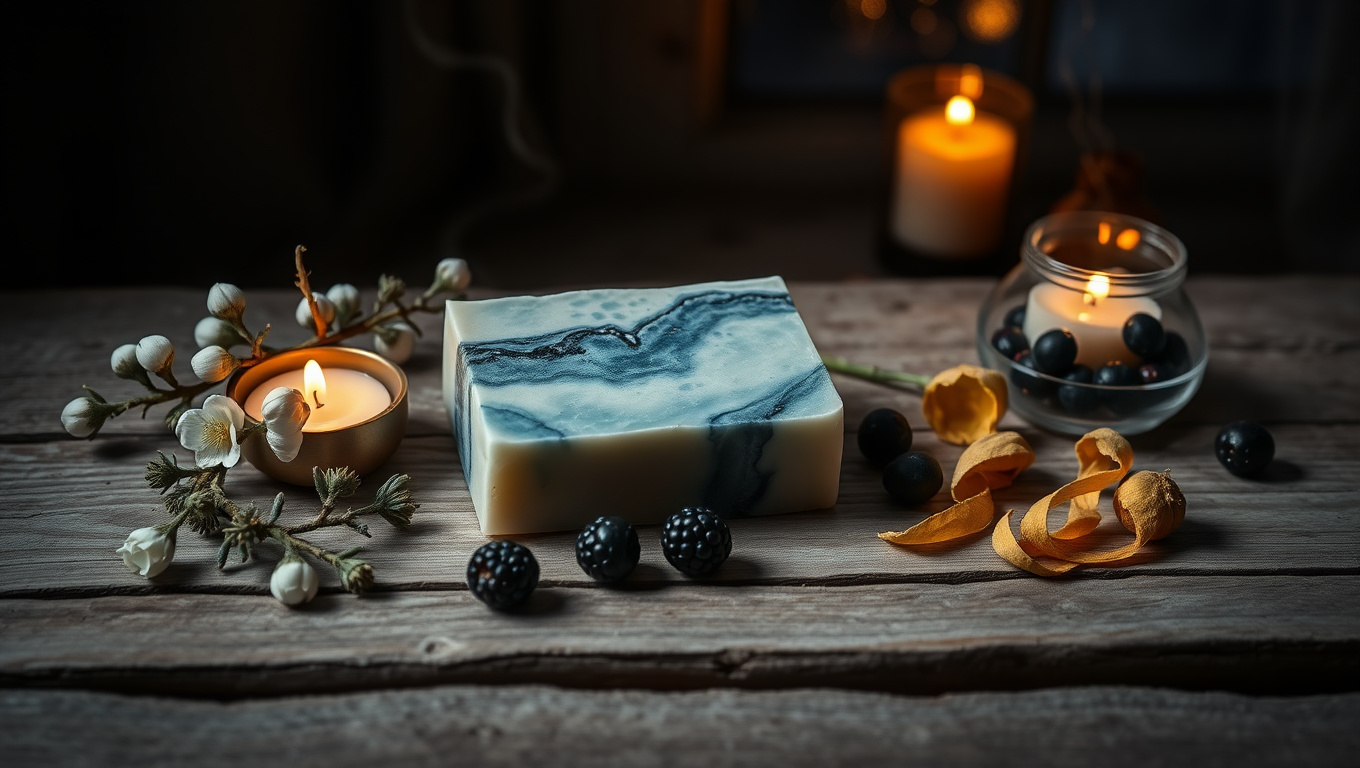
That’s where Siren’s Song, a handmade witch soap from Spellbound Grove, lives. It’s built around ylang ylang, bergamot, jasmine, blue spruce, and blackberry — and together those notes do something unusual. They smell like the edge of the ocean, like a sea breeze moving through something floral and green. Not sharp, not cloying, but briny and clean and alive. The bar is finished with a tumbled piece of blue aventurine, a stone that has long been associated in folk tradition with confidence and good fortune.
This post is about how to use that bar — or any ritual soap you love — as the foundation of a genuine self-care practice centered on confidence and allure. Not in a performative way. Not as a gimmick. But as a real, sensory anchor for coming back to yourself.
What Makes a Handmade Witch Soap Different
If you’ve only ever used mass-produced soap, the first thing you’ll notice about a small-batch handmade bar is the weight of it. It feels substantial. The surface isn’t perfectly smooth — there are slight variations, a dusting of botanical pigment, sometimes an adornment pressed into the top. It looks like something that was actually made by a person, because it was.
The difference goes beyond aesthetics. Most commercial soaps are technically detergent bars — they’ve had the glycerin removed during manufacturing, because glycerin is valuable and can be sold separately. Handmade cold-process or hot-process soap retains that naturally occurring glycerin, which is part of why it feels different on the skin. It leaves a softer, less stripped feeling after rinsing.
Small-batch ritual soap also tends to use botanical oils as the base — things like olive, coconut, castor, or shea — rather than synthetic fillers. The scent comes from fragrance oils or essential oils rather than synthetic parfum, and the overall ingredient list is shorter and more legible. You can actually read it and know what you’re putting on your skin.
Then there’s the intention behind it. That word gets used loosely, I know. But what it means in practice is this: someone sat down and thought carefully about what a soap inspired by a siren should smell like, what stone should accompany it, what feeling it should evoke when you hold it in your hands. That kind of deliberate craft changes the object. Not in a mystical way you have to believe in — just in the way that anything handmade with care carries something of the maker in it.
The Siren in Folklore
The siren is one of the oldest archetypes in Western mythology. In early Greek tradition, sirens weren’t the fish-tailed creatures they later became — they were part bird, part woman, perched on rocky coastlines, singing. The sailors who heard them were drawn not by physical beauty alone, but by something less tangible: a sound that seemed to promise knowledge, or homecoming, or something just beyond reach.
What’s interesting about the siren, when you sit with her, is that her power wasn’t aggressive. It was magnetic. She didn’t chase. She called. And there’s something in that distinction worth thinking about when you’re building a ritual around allure and confidence. The siren’s power came from being fully, completely herself — rooted in her place, unapologetic about what she was.
A self-care ritual built around that archetype isn’t about performing attractiveness for anyone else. It’s about coming back into your own presence so fully that you become magnetic simply by being present.
The Scent Profile: Why These Notes Work Together
Scent is the fastest route to memory and mood. That’s not a mystical claim — it’s just how the olfactory system works. Smell bypasses a lot of the brain’s usual processing and connects almost directly to areas associated with emotion and memory. That’s why certain smells can shift your internal state almost instantly.
The botanical notes in Siren’s Song are chosen with real coherence. Let’s look at what each one brings.
Ylang Ylang
Ylang ylang comes from the flowers of the Cananga odorata tree, native to tropical Southeast Asia. The name roughly translates to “flower of flowers” in Tagalog. The scent is rich, heady, and deeply floral — almost creamy at the center. In folk tradition and perfumery, it’s long been associated with sensuality and femininity. It’s a bottom-of-the-throat kind of smell. Grounding, warm, a little intoxicating.
Bergamot
Bergamot is a citrus fruit — the rind is cold-pressed for its oil, and the result is bright, slightly floral, with a green-tea quality underneath. It’s the note that gives Earl Grey its distinctive character. In a scent blend, bergamot lifts the heavier florals and keeps them from becoming too dense. It adds a kind of freshness that in this context reads as confidence — a lightness of touch.
Jasmine
Jasmine is one of the most widely used florals in perfumery, and for good reason. It has a quality called “animalic” — a slight warmth underneath the sweetness that makes it smell alive rather than artificial. Jasmine has been used in folk tradition across many cultures as a symbol of love, beauty, and spiritual connection. In this blend, it fills the middle space between the top notes and the base.
Blue Spruce
This is the note that makes Siren’s Song unusual. Blue spruce brings a sharp, resinous green quality — the smell of cold air, of conifer needles, of something wild and coastal. It balances the florals and keeps the soap from reading as purely romantic or soft. There’s an edge to it. It’s the sea-breeze quality, the thing that makes this soap smell like standing somewhere open rather than sitting in a garden.
Blackberry
Blackberry in fragrance is both fruity and slightly tart — it has a dark-fruit quality that anchors the blend with a touch of sweetness without going saccharine. It adds depth and a late-summer, slightly wild feeling to the overall scent.
Together, these notes create something genuinely complex: floral but not soft, oceanic but not synthetic, warm but not heavy. It’s a scent profile that sits on the skin for a while rather than disappearing after the rinse.
Building a Self-Care Ritual Around Siren’s Song
A ritual doesn’t have to be elaborate to be meaningful. What makes something a ritual rather than just a habit is awareness — doing the thing with your attention actually present, rather than on autopilot while your mind is somewhere else entirely.
Here’s a simple bath or shower ritual built around confidence and allure that you can adapt to your own practice and timing.
Set the Space First
Before you turn on the water, take two minutes to prepare the room. Light a candle — one with a clean scent or no scent at all, so it doesn’t compete. Dim the lights or turn them off if you have a candle. Put your phone somewhere you won’t see its screen light up. If you have music or sound you use for quiet focus, put that on now.
This small act of preparation matters. It signals to your nervous system that what’s about to happen is different from the rest of the day. It’s not about creating a perfect Instagram moment. It’s about telling yourself: this time is mine.
Hold the Bar Before You Begin
This sounds small, but try it. Pick up the soap and just hold it for a moment. Feel its weight. Smell it without rushing. The blue aventurine pressed into the top of Siren’s Song is smooth and cool under your thumb. In folk tradition, blue aventurine is associated with courage and inner calm — with the kind of quiet confidence that doesn’t need to announce itself. Whether or not you work with stones in your practice, there’s something grounding about simply noticing what you’re holding.
Take a breath and let the scent settle. Notice which notes hit first — for most people it’s the bergamot and jasmine — and then notice what comes underneath as it warms against your skin.
Use Water Intentionally
Water has been used in cleansing and ritual practice across nearly every culture that has ever existed. You don’t have to subscribe to any particular tradition to bring awareness to it. As you step in, let yourself acknowledge what you’re washing away — the tension in your shoulders, the residue of a difficult conversation, the low-grade static of a long week. You don’t need words for this. Just the awareness.
Work the soap into a lather slowly. Let the scent open up in the steam. The blue spruce and bergamot will bloom in warmth. The jasmine and ylang ylang deepen. This is the point in the ritual where, if you’re doing it right, the noise in your head begins to quiet a little.
Close with Intention
When you’re done, take one more moment before you reach for your towel. Stand still. Breathe. Let the steam settle around you. This is the part most people skip — the pause at the end that lets the ritual land rather than rushing back into the to-do list.
Some people like to close with a word or a phrase — something simple, said quietly, like “I am enough,” or “I show up fully as myself.” Others prefer silence. Either way, the act of pausing is the closing of the container. It marks the difference between a routine and a ritual.
When to Perform This Ritual
Any time is the right time for a ritual that brings you back to yourself. But there are a few moments in the cycle of the month and the year when it can feel especially resonant.
Full Moon Bath Ritual
The full moon has been associated with culmination, visibility, and completion in folk tradition across many cultures for centuries. It’s a moment of maximum light — which maps naturally onto themes of confidence, being seen, and stepping into your own power. A full moon bath ritual using Siren’s Song is a natural fit. The siren, after all, is a creature of water, of the tides, of the liminal space where sea meets land.
If you want to lean into the moon connection, try timing your bath for the evening of the full moon. Open a window if the night is warm enough to let in some air. If you can see the moon from your bathroom, even better — but it isn’t required for the ritual to be meaningful.
Before Something That Asks Something of You
This is where the confidence angle becomes practical. A job interview. A first date. A difficult conversation. A performance. A presentation. Anything where you need to walk in as your most present, most grounded self.
Using a ritual soap intentionally before these moments is less about magic and more about psychology — about anchoring your state of mind in a sensory experience that says: I prepare. I show up with intention. I am ready.
The scent of Siren’s Song lingers gently after rinsing. That’s not an accident in how a good ritual soap works. You carry a trace of it with you, a small sensory reminder of the intention you set in that quiet room before the day began in earnest.
Caring for Your Handmade Soap Bar
Handmade natural soap bars are different from commercial bars in one practical way you should know: they need to drain and dry between uses. Because they retain glycerin and are made without the hardening agents that commercial bars use, they’ll soften and dissolve more quickly if they sit in standing water.
A simple wooden soap dish with slats that allow airflow underneath is ideal. Keep it away from direct spray in the shower if you can. Between uses, let the bar dry fully. Stored this way, a well-made small-batch bar will last considerably longer than you might expect.
If you want to extend the life of a bar you particularly love, you can also cure it further after purchase — unwrap it and let it sit in a cool, dry place for a few weeks. The bar will harden and the lather will become even richer. This is especially useful for the softer, more oil-rich formulas that characterize many handcrafted bars.
On Allure, Confidence, and the Everyday Ritual
There’s a version of “allure” that’s about performance — the careful assembly of an appearance, the strategic presentation of a self. That version is exhausting and ultimately hollow.
And then there’s the version that the siren archetype actually points toward. The kind of allure that comes from being so thoroughly at home in yourself that it radiates outward without effort. That version isn’t manufactured. It’s cultivated. Quietly. In small, repeated moments of choosing presence over distraction, choosing care over neglect, choosing to show up for yourself before you show up for anything else.
A handmade witch soap won’t do that work for you. But it can be part of the practice. A sensory anchor. A daily reminder, as small and as real as lather and warm water, that you are worth the few minutes it takes to be present with yourself.
That’s what ritual soap, at its best, actually is.
Explore Siren’s Song and More Ritual Soaps at Spellbound Grove
If Siren’s Song sounds like your kind of magic, you can find it here — handcrafted in small batches with ylang ylang, bergamot, jasmine, blue spruce, blackberry, and a tumbled piece of blue aventurine on top. It’s a genuinely unusual bar, and it’s one of those scents you have to smell to fully understand.
If you’re not sure where to start, Spellbound Grove also offers a free soap sample — one handcrafted bar in a scent of your choice, available in regular or nut-free. It’s a good way to try the lather, the feel, and the scent of a ritual bar before committing to a full-size bar. And if you want to try a couple of different scents side by side, the Build Your Sample Pack lets you choose two samples together.
When you’re ready to explore the full collection of handmade witch soap, botanical bath goods, and witchy goods, browse everything Spellbound Grove has to offer. Something in there will call to you. That’s kind of the point.