
The Magic of Small-Batch Soapmaking: Why Handmade Witch Soap Is Different
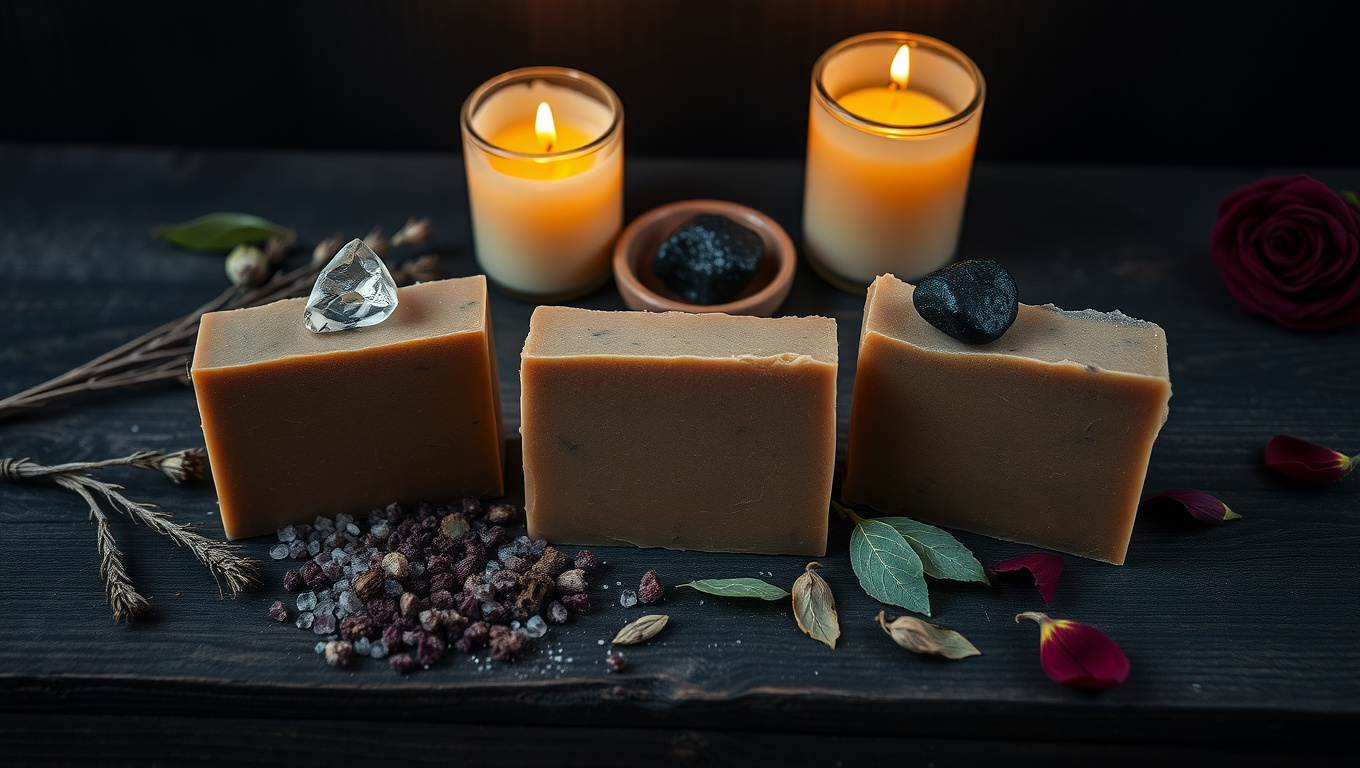
Pick up a bar of genuine handmade witch soap and hold it for a moment. The weight is different from what you find stacked in grocery store aisles. The surface has texture — maybe a swirl of color, an embedded stone, a dusting of botanicals pressed gently into the top. It smells like something real: resin, bark, flower, spice. That difference is not just aesthetic. It goes all the way down to the chemistry, the craft, and the care that shaped it. Small-batch soapmaking is a slow process, deliberately so, and once you understand what actually happens in a batch of handcrafted soap, it’s hard to look at the commercial stuff the same way again.
There is a reason so many people who love natural living, folk herbalism, and intentional ritual end up drawn to handmade soap specifically. It sits at a genuine crossroads: it is both a practical daily object and something you can make meaningful. A bar of soap is one of the few things you bring into your home that you will use every single day, often more than once. That repetition is its own kind of ritual, even if you never think of it that way. And when the soap itself is made with real botanical ingredients, in small quantities, by someone who actually knows what goes into it — that daily act picks up a little weight.
This is what small-batch soapmaking is really about. Not novelty. Not aesthetics for their own sake. The craft itself is rooted in something older, more practical, and more interesting than most people realize.
What Actually Happens When Soap Is Made
At its core, soap is the result of a chemical reaction called saponification. Oils or fats — think olive oil, coconut oil, shea butter, castor oil — are combined with an alkali, traditionally lye (sodium hydroxide for bar soaps). The lye triggers the reaction that transforms those oils into soap and glycerin. Once the process is complete, no lye remains in a properly made bar. This is basic soap chemistry, unchanged in its fundamentals for centuries.
What changes dramatically between a mass-produced commercial bar and a small-batch handcrafted one is almost everything else: which oils are used, how much of each, whether the naturally produced glycerin is kept in the bar or extracted, what botanicals or fragrance elements are added, and how long the soap is allowed to cure before it reaches you.
The Glycerin Question
Here is one of the most significant differences, and one that many people don’t know about. When soap is made, glycerin is a natural byproduct of saponification. Glycerin is a humectant — it draws moisture toward itself — and it is genuinely lovely to have in a bar of soap. In large commercial soap manufacturing, that glycerin is typically extracted and sold separately (it has many industrial uses). What is left behind is a leaner bar that does the job of cleaning but has had something valuable removed from it.
In small-batch cold process or hot process soapmaking, the glycerin stays in the bar. It is not extracted. It is simply there, integrated into the finished soap, doing what it does. This is one of the reasons handmade soap tends to feel different on your skin — softer, less stripping. You are getting the whole product of that saponification reaction, not a version from which a useful component has been pulled out for profit.
The Oil Blend Matters More Than You Think
Every oil in a soap recipe contributes something different to the final bar. Coconut oil creates a hard bar with a rich lather. Olive oil adds a gentle, conditioning quality and has been used in soap for an extraordinarily long time — Castile soap, made purely from olive oil, is one of the oldest documented soap styles in Europe. Castor oil, used in small amounts, helps build and stabilize lather. Shea and cocoa butter add richness and hardness. Sweet almond, avocado, hemp seed — each has its own character.
A small-batch soapmaker can tune that blend deliberately, thinking about how the finished bar will feel, how long it will last, how it will lather. A commercial operation working at scale doesn’t have that flexibility in the same way. The economics of mass production push toward a simpler, more standardized formula. Small-batch work allows for real intentionality in the recipe itself.
The Role of Botanicals, Fragrance, and Intention in Ritual Soap
This is where ritual soap becomes its own thing. Once you understand the base craft — oils, lye, saponification, cure time — you start to see how much creative and intentional space exists within it. What herbs, resins, clays, or botanically derived scents go into the soap? What stones or adornments are pressed into the surface? What season or purpose shaped the recipe?
Fragrance in small-batch soap typically comes from essential oils or carefully sourced fragrance oils. Essential oils are derived from actual plant material — the distilled essence of flowers, bark, roots, leaves, or resin. Lavender, cedarwood, patchouli, frankincense, myrrh, clary sage, cypress — these are all real botanical extracts with long histories in folk practice and traditional crafts. They bring a complexity and depth to a soap’s scent that is genuinely different from synthetic fragrance, though skilled soapmakers sometimes blend both to achieve a scent that couldn’t exist otherwise.
Folk herbalism has long associated certain plants with certain qualities, seasons, and purposes. Cypress has been connected to transitions, thresholds, and the darker half of the year in various folk traditions. Frankincense and myrrh carry centuries of ceremonial use across many cultures. Lavender appears in folk practices across Europe as a plant associated with purification, rest, and protection. None of these are medical claims — they are cultural and traditional associations, the kind that accumulate around plants that have been used and observed for a very long time. When a soap is crafted around those botanical relationships, it carries that context with it, lightly.
What Makes a Soap a Ritual Soap
A ritual soap isn’t a different chemical formula. It is soap made with a specific orientation — toward purpose, season, symbolism, or practice. The scent profile might be chosen to evoke a particular time of year or a folk tradition. An embedded stone might carry meaning in crystal lore. The color might reference lunar phases or elemental symbolism. These are layers of meaning added to an already functional object.
For someone who engages with witchy self-care or seasonal living, this layering matters. The morning or evening bath becomes something more than hygiene. It becomes a moment of awareness, a small act of alignment with whatever practice or intention you’re working with. That is not grandiose. It is actually quite quiet and ordinary — which is exactly what makes it sustainable as a practice.
Take Dark Alchemy from Spellbound Grove as an example. The scent profile moves through myrrh, cypress, lavender, jasmine, rose, patchouli, cinnamon, and black pepper, with a clear quartz adornment set into the top of the bar. That is a genuinely complex blend — resinous and warm at the base, floral in the middle, with an edge of spice. It smells like something ancient and considered. It also works as soap. Both things are true at once.
Or consider Hecate’s Feline Friend, built around cypress, lavender, clary sage, cedarwood, and patchouli with a prehnite stone on top. The scent is earthy and herbal, woody and cool — the kind of thing that feels right for a quiet evening bath when you want to slow down and be still. The association with Hecate, a figure from Greek mythology long connected to crossroads, the moon, and liminal spaces, gives the bar a story. But it stands on its own as a beautifully scented, well-crafted piece of soap regardless of whether you bring any of that mythology with you.
The Cure: Why Patience Is Part of the Process
One of the things that separates genuine small-batch soapmaking from rushed production is cure time. After a cold process soap is made and poured into molds, it needs to cure — typically for four to six weeks, sometimes longer. During this time, the remaining water evaporates from the bar, the saponification process completes fully, and the soap becomes harder, milder, and longer-lasting.
You cannot rush this. A soap pulled from the mold after a week is a different product than one that has cured for six. The longer-cured bar will last longer in use, lather more efficiently, and feel gentler. For a small-batch maker, this means holding inventory, planning ahead, and accepting that good soap takes time. It is one of the more humbling aspects of the craft — the work happens, and then you wait, and the waiting is part of what makes it good.
This is also why small-batch soaps, priced fairly, often cost more than a commercial bar. You are paying for real oils, real botanicals, real fragrance ingredients, the labor of mixing and pouring and cutting and stamping, weeks of cure time, and the knowledge that went into the recipe. That is a reasonable exchange.
Seasonal and Moon-Aligned Soapmaking
Many small-batch soapmakers work seasonally — not just as a marketing approach, but because the practice of aligning craft with the turning year is genuinely grounding. There is something that feels right about making a soap heavy with spiced apple, clove, and frankincense in early autumn, or a soap threaded with fresh, green herbal notes in spring.
Seasonal soap is also just practical. Certain scents feel appropriate at certain times of year. Heavy, resinous, warm blends suit the dark months. Lighter, citrus-forward or floral blends suit the warmer ones. Matching your soap to the season is a small way of staying attuned to the rhythm of the year, and it turns an ordinary rotation of household goods into something a little more intentional.
Moon-aligned soapmaking follows a similar logic. The full moon has long been associated in folk practice with completion, visibility, and energy at its peak. Many witchy practitioners time certain rituals or practices to lunar phases — full moon baths, new moon intentions, dark moon releases. A bar crafted specifically for a full moon bath ritual, or for the kind of shadow work and release that many people associate with the waning moon, carries that temporal context into the practice.
Spellbound Grove’s Triple Moon Goddess soap — scented with lavender, frankincense, myrrh, and vanilla, with an amethyst adornment — is one example of a bar shaped around lunar symbolism. The triple moon is a symbol connected to the waxing, full, and waning phases, and has been associated in modern witchcraft and some older traditions with cycles of becoming, being, and releasing. The scent is described as light, floral, and powdery — the kind of thing that feels genuinely right for a quiet night bath under a full moon, candles lit, no particular rush.
A Simple Ritual for Your Next Bath
You don’t need an elaborate setup to turn a bath into something meaningful. Here is a simple framework that works whether you’re a practicing witch or simply someone who values a little more intention in their daily life.
Before You Get In
- Light one or two candles. Beeswax or soy, unscented or lightly scented — nothing that will compete with your soap.
- Choose your soap with some awareness. What does it smell like? What botanical notes does it carry? What season or mood does it evoke? Let that inform your choice rather than just grabbing whatever is closest.
- Set your phone in another room if you can. Even ten minutes without it changes the quality of the experience.
In the Water
- Hold the bar for a moment before using it. Notice the scent, the weight, the texture of the surface.
- Lather slowly. This is not a time trial. Let the fragrance open up in the steam.
- If you work with intention — releasing something, welcoming something, marking a transition — let the act of washing carry that thought. Water has been used symbolically in cleansing rituals across cultures for as long as there have been rituals. You are participating in something genuinely old.
After
- Store your handmade soap on a draining soap dish, away from direct water spray. Handmade bars, because they retain their glycerin, can soften faster than commercial bars if they sit in standing water. A good draining dish extends the life of the bar significantly.
- Give yourself a few minutes before returning to your phone or your to-do list. The ritual doesn’t end when you step out of the water.
Choosing the Right Handmade Witch Soap for Your Practice
The best way to find a soap that suits you is honestly just to smell things and trust your instincts. Scent is deeply personal and often visceral — you know within a breath or two whether something resonates. That said, a few practical notes:
If you’re new to handmade soap, starting with a sample is smart. Spellbound Grove offers a free soap sample — one bar, your choice of available scents, regular or nut-free formula. It is a genuinely low-stakes way to experience what small-batch ritual soap actually feels like in use before committing to a full bar. There is also a Build Your Sample Pack option if you want to try two different scents side by side, which is a good approach if you’re torn between something dark and resinous and something lighter and floral.
Think about what you want the soap to do for you in terms of atmosphere and association, not just scent. A soap for shadow work or journaling rituals might call for something grounding and smoky — cedarwood, vetiver, firewood — like Shadow and Sage, with its notes of vanilla, cedarwood, vetiver, and firewood. A soap for a self-love ritual or a romantic evening might call for something warmer and sweeter — ylang ylang, rose, jasmine, vanilla. A soap for the height of autumn, when the year is turning and the dark months are coming, might be something like the Samhain-inspired Hollow Night, with pumpkin cider, chocolate amber, and smoky sandalwood.
There is no wrong answer. The point is to choose with some awareness rather than none.
Why Small-Batch Still Matters
There is a broader argument to be made here, beyond personal ritual. When you buy small-batch handmade soap, you are supporting a model of production that is fundamentally different from industrial manufacturing. Small batches mean the maker can actually monitor quality at every stage. They can adjust a recipe when an ingredient behaves differently. They can notice when something isn’t right and fix it before the batch goes out. That level of attentiveness is structurally impossible at scale.
Small-batch also means limited quantities, which means the soap you receive was not sitting in a warehouse for two years. Handmade soap has a natural shelf life. The botanical ingredients are real and will eventually change. A bar made recently, cured properly, and stored well is a bar at its best.
And there is something worth saying about the human element. A person made this. They measured the oils, heated them, mixed the lye solution carefully, watched the temperature, added the fragrance at the right moment, poured the batter, waited for it to harden, unmolded it, cut it, stamped it or topped it by hand, set it on a rack, and waited weeks before it was ready to sell. That is a significant amount of care for an object that costs less than a fancy candle. It deserves to be used with at least a fraction of the attention that went into making it.
The Simple Enchantment of a Bar Made by Hand
This is what it comes down to, really. A good bar of handmade witch soap is not magic in a theatrical sense. It does not transform your life. It will not solve your problems. What it does is give you a daily object that was made carefully, from real ingredients, with some thought behind it — and it asks you, gently, to bring a little of that same attention to the act of using it.
That is enough. In fact, for most of us, that is quite a lot.
If you’ve never tried a small-batch ritual soap before, or you’ve been curious about what sets them apart from what’s on the drugstore shelf, there is an easy way to find out. Browse the handcrafted soaps and botanical bath goods at Spellbound Grove — the whole shop is small-batch, all-natural, and made with the kind of intention this article has been talking about. And if you want to start small, that free sample is right there waiting for you. No strings, no pressure. Just a little taste of something made by hand.