
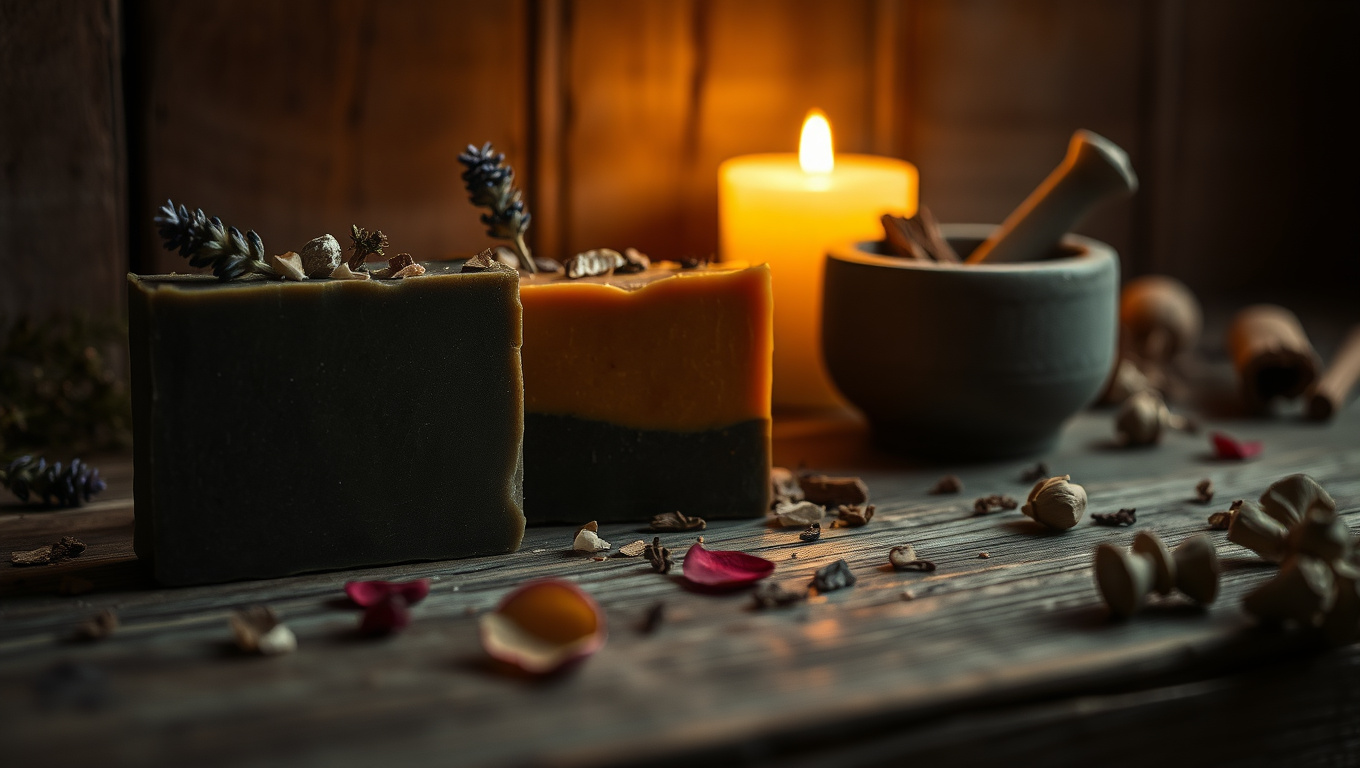
What Witchy Self-Care Actually Means
There’s a moment that happens sometimes in a long bath — the water warm, candles lit, something earthy and floral rising from the soap in your hand — where the noise of the day just settles. That’s it. That’s the thing. That’s what witchy self-care actually is.
It isn’t about owning the right crystals or memorizing moon phases, though those things have their place. At its core, witchy self-care is about being present with yourself, using natural things made with care, and treating ordinary acts — washing, breathing, resting — as worth doing slowly and with intention. A bar of handmade witch soap sitting on your bath ledge isn’t magic in the Hollywood sense. It’s magic in the older, quieter sense: something made by hand, from plants, with a purpose in mind.
If you’re new to all of this, start here. No prior knowledge required. No altar necessary. Just a willingness to make your daily routine feel like it belongs to you.
Why Handmade Witch Soap Is the Easiest Place to Begin
Soap is something most of us use every single day, which makes it one of the most effortless entry points into intentional living. You’re already washing your hands, already stepping into the shower. The only shift is choosing something made with real botanicals, real oils, and real care instead of something mass-produced and loaded with synthetic fillers.
Handmade soap — true cold-process or hot-process soap made in small batches — behaves differently than commercial bars. It retains glycerin, a natural byproduct of the saponification process that commercial soapmakers typically remove and sell separately. That glycerin stays in the bar, which is part of why handmade soap tends to feel softer and more nourishing against skin. The lather is different too. Richer. More like something alive.
Beyond the feel, there’s the ingredient story. A small-batch ritual soap might contain cypress and cedarwood for their deep, resinous scent, patchouli for its grounding earthiness, or lavender because it’s been used in folk traditions across cultures for centuries to bring calm to the body and the space around it. None of that is marketing language. Those are real plants with real histories, and when you hold a bar and breathe in, you’re connecting with something genuinely old.
What Makes a Soap “Ritual”?
The word “ritual” gets used loosely these days, but in folk practice, it simply means an intentional act done with awareness. A ritual isn’t automatically spiritual unless you want it to be. It can just mean: I’m going to do this thing slowly, on purpose, and pay attention while I do it.
A ritual soap is one made with that same intention — chosen botanicals, a specific mood or purpose in mind, often a connection to a season, a lunar phase, a folk archetype, or a personal intention. The maker’s care goes into it. Your awareness meets it on the other end. That exchange — small and quiet as it is — is the ritual.
Getting to Know Botanical Ingredients
You don’t need to be an herbalist to appreciate the plants in your soap. But knowing a little about what you’re working with makes the experience richer. Here are some botanicals and ingredients that show up often in handmade witch soap and what they bring to the bar.
Lavender
One of the most widely used plants in folk herbal tradition. Its scent is soft, floral, and slightly powdery. Lavender has been tucked into pillow sachets, hung in doorways, and used in bathing rituals for a very long time across European folk traditions. In soap, it lends a calm, familiar sweetness that many people find grounding.
Patchouli
Deep, earthy, and distinctly woody, patchouli is one of those scents that tends to divide a room. But in a well-balanced soap, it adds a dark richness that anchors lighter florals and keeps a blend from going too sweet. It’s long been associated with grounding practices and earth-centered magic.
Cedarwood
Dry, warm, and faintly smoky, cedarwood brings a forest quality to any blend. It’s traditionally associated with protection and strength in a number of folk traditions, and in soap it pairs beautifully with both floral and resinous notes.
Frankincense and Myrrh
These two resins have probably the longest ceremonial history of almost any aromatic substance. Used in ancient ritual spaces, traded across continents, burned in temples — both carry a deep, sacred weight that translates even into soap. Frankincense is bright and slightly citrusy beneath its resinous body. Myrrh is darker, more bittersweet. Together, they create something that smells genuinely ancient.
Clary Sage and Cypress
Clary sage has a herbal, slightly nutty scent that’s distinct from common culinary sage. Cypress is clean and evergreen, with a cool, almost ceremonial quality. Both have been used in traditions associated with transition, clarity, and the in-between spaces — fitting companions for any soap meant for reflective moments.
The Basics of Building a Witchy Self-Care Practice
Starting a practice like this doesn’t require a complete lifestyle overhaul. It’s more about layering small, intentional choices into the routine you already have. Here are some honest, low-barrier places to begin.
Choose One Intentional Product
Pick one thing — a bar of natural handmade soap, a botanical bath salt, a candle — and let that be your anchor. Using something made with care and real ingredients shifts the quality of your attention. You start to notice the scent, the texture, the way the bar wears down over weeks. That noticing is the beginning of the practice.
Create a Small Before-Bath Ritual
Before you step into the bath or shower, take thirty seconds. Light a candle. Set an intention — even something simple like “I’m washing the day off” or “I want to feel more like myself.” It sounds small because it is small. That’s not a flaw. Small, repeated acts are how any tradition takes root.
Work With the Moon (or Don’t)
Lunar timing is a genuine thread through many folk traditions, and a full moon bath ritual is one of the most common entry points into witchy practice. The idea is simply that the full moon — a time traditionally associated with culmination, clarity, and release — is a meaningful moment to do something intentional with your body and your intentions. A long bath with a carefully chosen ritual soap, candlelight, and some quiet reflection is a full moon bath ritual. You don’t need more than that.
That said, you don’t have to track the moon at all. The practice works just as well on a random Tuesday when you need to reset.
Try Shadow Work Soap as Part of Journaling
Shadow work — a term borrowed from Jungian psychology and woven into modern witchy practice — refers to the practice of sitting with the parts of yourself you’d rather not look at. It’s reflective, sometimes uncomfortable, and genuinely useful. Some people find that pairing shadow work journaling with a grounding ritual — including washing hands with a purposeful soap before and after the session — creates a helpful container for the work. A soap like Shadow and Sage, with its notes of vanilla, cedarwood, vetiver, and firewood, was made with exactly this kind of quiet, courageous work in mind.
Matching Soaps to Your Intentions
Part of the pleasure of small-batch ritual soap is that each bar tends to have a specific mood or purpose. Choosing one that resonates with where you are right now — or where you want to be — is itself a small act of self-knowledge.
For Stillness and Deep Reflection
If you’re drawn to the archetype of Hecate — the ancient goddess of crossroads, magic, and the liminal spaces between things — Goddess Hecate carries notes of myrrh, cypress, lavender, jasmine, and amber, along with an antique key adornment. It’s a bar made for quiet, moonlit moments. The kind of bath you take when you need to think something through, or simply stop thinking for a while.
For Self-Love Rituals
The Love Spell bar is built around ylang ylang, sweet orange, rose, jasmine, and vanilla, with a rose quartz adornment. It’s a warm, rich, beautifully rounded scent — the kind that feels like a genuine indulgence. Perfect for a self love ritual soap practice, or for any night when you want to feel cared for.
For Lunar and Moon Rituals
The Triple Moon Goddess soap — lavender, frankincense, myrrh, and vanilla with an amethyst adornment — is made specifically for moon baths and spiritual cleansings. Its scent lands somewhere between floral and softly powdery, grounding and quietly ceremonial at once. If you’re building a full moon bath ritual, this is the bar to reach for.
A Simple Full Moon Bath Ritual for Beginners
This requires no tools you don’t already have, no memorized words, and no particular belief system. It’s just a framework for a bath that feels intentional rather than incidental.
- Before you run the water: Tidy the bathroom a little. Not obsessively — just enough that the space feels like it belongs to you tonight. Light one or two candles.
- Set a loose intention: What do you want to let go of? What do you want more of? You don’t need to say it out loud or write it down. Just hold it briefly in your mind before you get in.
- Choose your soap with some care: Pick something that speaks to your mood. Earthy and grounding if you’ve been scattered. Floral and warm if you need softness. Bright and resinous if you want clarity.
- Wash slowly: This sounds almost too simple to say, but most of us wash quickly out of habit. Go slowly. Notice the scent of the soap. Feel the lather. Let the water be warm enough to fully relax into.
- After the bath: Sit quietly for a few minutes before you reach for your phone. The shift you created with the ritual is still settling. Give it a moment.
That’s it. Genuinely. The elaborateness of a ritual has very little to do with its meaning.
Caring for Your Handmade Soap Bar
Small-batch natural soap is made differently than commercial bars, and it benefits from a little different care. A few simple habits will make your bar last longer and stay in better condition.
Keep It Dry Between Uses
This is the single most important thing. Handmade soap softens when it stays wet, so a soap dish with drainage — something that lets air circulate underneath — will extend the life of your bar significantly. A wooden soap dish or a loofah pad works well. Avoid leaving it sitting in a puddle of water.
Let It Cure If You Can
Many small-batch soaps benefit from a curing period — time spent resting in dry air after they’ve been made, which allows excess water to evaporate and the bar to harden. If you receive a bar that feels soft, let it rest on a dry soap dish for a week or two before you start using it daily. It’ll last longer.
Store Extras Somewhere Cool and Dry
If you stock up on bars — which is easy to do when the seasonal ones are irresistible — keep extras away from humidity and direct sunlight. A linen drawer works beautifully. They’ll scent your linens as a bonus.
Not Sure Where to Start? Try a Sample First
One of the genuinely useful things Spellbound Grove offers is the chance to try before you commit to a full bar. The free soap sample lets you choose from several of the most popular scents — available in regular or nut-free formula — so you can get a real sense of the lather, the scent, and the feel before you decide what your ritual calls for. There’s also a Build Your Sample Pack if you want to try two at once and compare.
Starting with a sample is a good instinct. Scent is deeply personal, and what sounds appealing in a description doesn’t always translate to what feels right on your skin. Testing first is just practical.
Finding Your Version of the Practice
The witchy self-care space has grown crowded with aesthetics — and aesthetics are fine, they’re genuinely enjoyable — but the substance of the practice is quieter and more personal than any particular look. Your version of it doesn’t need to match anyone else’s. It might be a long bath on full moon nights with a bar of ritual soap and complete silence. It might be a five-minute morning wash with something that smells like cedarwood and clary sage, just to start the day on your own terms. It might be seasonal — a Samhain bar in late October, a bright citrus soap in spring.
What matters is that you chose it, you made it yours, and you did it with some awareness. That’s the whole thing.
A bar of handmade witch soap is a small object. But so is a seed, and look what seeds do when you pay attention to them.
Begin With Something Real
If this guide has stirred any curiosity in you — about botanicals, about ritual bathing, about what it feels like to wash with something made by hand from real plants — the easiest next step is just to try a bar. Not because you need to buy something, but because the experience of a genuinely good handmade witch soap is one of those small pleasures that’s hard to fully describe until you’ve held one.
Every bar at Spellbound Grove is made in small batches, with real botanical ingredients, and with a specific intention behind the scent. There are no shortcuts in the process, and it shows in the finished product. If you’re ready to find a bar that suits where you are right now, browse the handcrafted soaps and botanical bath goods at Spellbound Grove and see what calls to you. Sometimes the right bar finds you before you finish reading the description.