
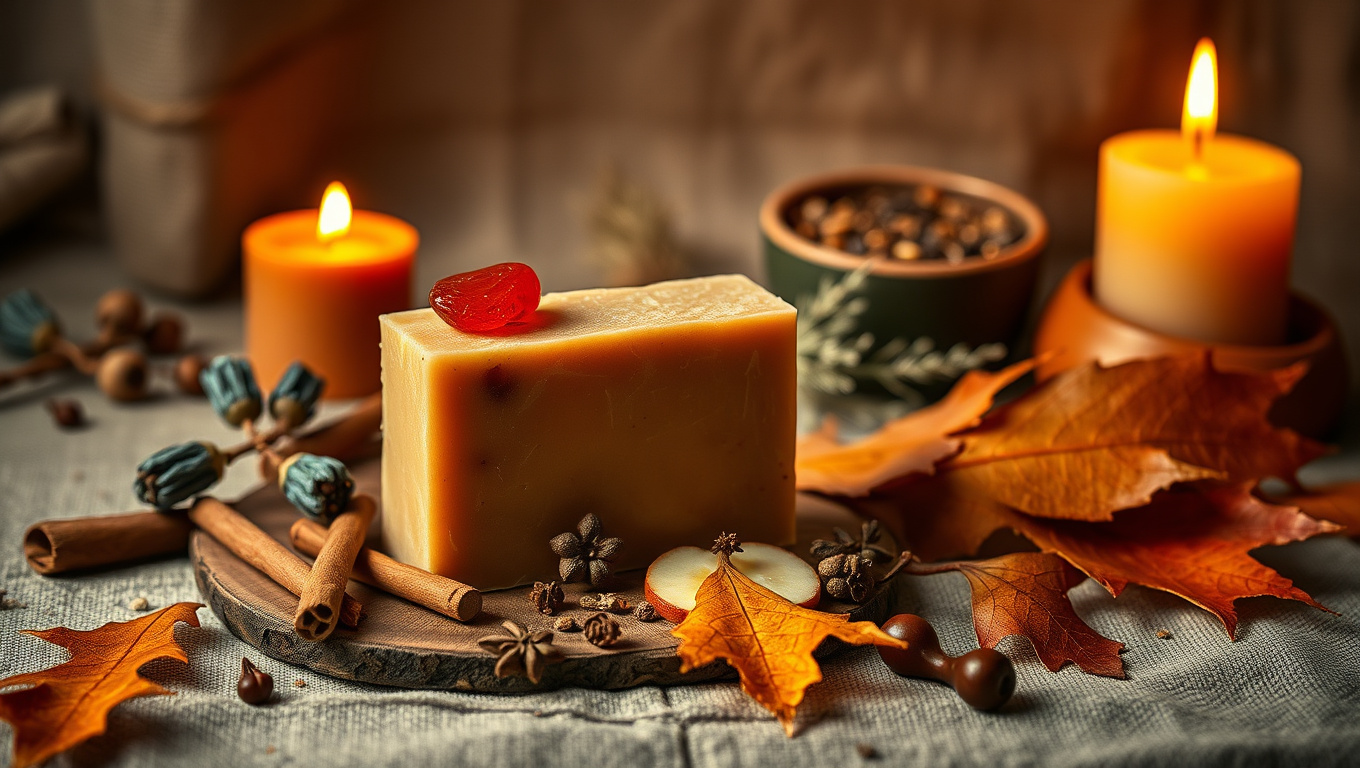
Fall Harvest Handmade Witch Soap: Where the Season Meets the Lather
There’s a particular moment in early autumn when everything shifts. The light goes golden and a little slanted. The air picks up a bite it didn’t have the week before. Somewhere nearby, someone is burning something — leaves, maybe, or a bonfire at the edge of a field — and that smell alone can pull you out of the ordinary and into something older. If you’ve ever stood in that moment and felt it land in your chest, you already understand why so many people who love seasonal living reach for a handmade witch soap when fall arrives. Not because a bar of soap is magical in some dramatic sense, but because scent is one of the fastest, most honest ways to anchor yourself inside a season.
Autumn has always been a time of harvest, of drawing inward, of honoring what’s been grown and what’s now ending. Folk traditions across many cultures have marked this turning with fire, food, and fragrance — spiced cider, woodsmoke, dried herbs bundled for the winter, the sweetness of apple orchards after rain. When those scents are woven into a handcrafted ritual soap, something genuinely lovely happens: your morning or evening bath stops being just maintenance and starts feeling like a quiet acknowledgment that the wheel has turned again. That’s not an exaggeration. It’s just what sensory ritual does.
This piece is for anyone who loves the texture of intentional, seasonal living — whether you identify as a practicing witch, a folk herbalism enthusiast, a lover of cottagecore aesthetics, or simply someone who thinks autumn deserves to be properly savored. We’ll talk about what makes a fall harvest soap different, which botanicals and fragrance notes carry that harvest energy, how small-batch soapmaking brings something the mass market can’t replicate, and how to build a simple bath ritual around the season. Somewhere in all of that, we’ll introduce you to a few bars worth knowing.
Why Autumn Has Always Been a Ritual Season
Long before the modern calendar sliced the year into neat quarters, people organized their lives around the turning of seasons. Harvest time — late summer into autumn — was one of the most significant of those turns. It was when the work of the year came in from the fields, when the community gathered to preserve, celebrate, and prepare for the cold ahead. It was also, in many folk traditions, a time when the boundary between the living world and whatever lies beyond it was thought to grow thin.
Mabon, observed near the autumn equinox, is one of the eight sabbats on the Wheel of the Year followed in many modern pagan and witchy traditions. It marks the second harvest and a moment of balance — equal light and dark — before the year tilts toward darkness. Samhain, at the end of October, honors the full crossing into the dark half of the year. Both hold a particular energy: gratitude, release, reflection, and a kind of sweet melancholy that autumn carries so naturally.
Scent as Seasonal Anchor
Scent memory is remarkably strong. Most people can tell you exactly what their grandmother’s kitchen smelled like in October, or what a particular campfire brings back. This isn’t just sentiment — it’s how scent is processed in the brain, routed through areas closely tied to memory and emotion before it ever reaches conscious thought. Fragrance doesn’t just remind us of things. It puts us back inside them, at least a little.
That’s why the scent of a bath product matters in a way that goes beyond pleasant packaging. When a ritual soap carries the scents of apple cider, warm spice, woodsmoke, or frankincense, it doesn’t just smell good in the shower. It participates in the season. It tells your senses: this is autumn, this is the harvest, this is time to slow down and take stock.
The Folk Herbalism of Harvest Ingredients
Many of the botanicals and fragrance notes associated with autumn have long histories in folk practice. Clove and cinnamon, for instance, were prized in European folk custom for their warming, spiced quality and their association with protection and abundance during the winter months ahead. Frankincense has been used in sacred and ritual contexts across many cultures for centuries, its resinous smoke long associated with contemplation and spiritual practice. Apple — the fruit of the harvest — appears again and again in folk magic traditions as a symbol of knowledge, the otherworld, and the cycle of life.
None of these ingredients are miraculous, and a good soapmaker wouldn’t claim otherwise. But there’s something genuinely meaningful about reaching for ingredients that carry centuries of human association with this particular season. It connects your small, daily ritual to something much longer.
What Makes a Handmade Witch Soap Different From a Store-Bought Bar
If you’ve only ever used commercial soap, the difference between that and a small-batch, handcrafted bar can be startling in the best way. Most mass-produced soap is made through a detergent-based process that strips the natural glycerin — a byproduct of saponification that makes soap feel moisturizing and gentle on skin — out of the finished bar. That glycerin is then sold separately to cosmetic companies. What you’re left with is a bar that cleans but can leave skin feeling tight or dry.
Small-batch cold-process or hot-process handmade soap keeps the glycerin in. The result is a lather that feels genuinely different — richer, softer, more nourishing on contact. A well-made handmade soap bar also tends to use skin-conditioning oils like olive, coconut, shea, or castor as its base, rather than cheaper commercial alternatives.
The Role of Intention in Small-Batch Craft
There’s also something harder to quantify but real nonetheless: the care that goes into a small-batch product made by hand, in limited quantities, by someone who has chosen every ingredient deliberately. When a soapmaker sits down to formulate a fall harvest bar, they’re making decisions about which spice notes to layer, how much warmth to build into the base, what grounding element will anchor the sweeter top notes. That’s a creative act. It’s craft in the original sense of the word.
At Spellbound Grove, every bar is made in exactly this way — small batches, intentional formulation, handcrafted with care. The Fall Harvest Natural Witch Ritual Bar Soap is a perfect example of what this kind of thoughtfulness produces. The scent profile layers apple cinnamon and nutmeg with clove bud and a grounding undernote of blue spruce, finished with frankincense — warm, spiced, and quietly resinous, like an autumn kitchen that opens onto a forest. It’s topped with a piece of carnelian, a stone long associated in folk and crystal traditions with vitality and the energy of the harvest season. It’s a bar designed specifically for a Mabon bath ritual at twilight, for honoring the season and the earth, though it’s equally at home in any October morning shower when you simply want to feel the season in your hands.
Natural Soap Bars and Botanicals: What to Look For
When choosing a natural handmade soap for fall ritual use, a few things are worth knowing. Look for bars that list their base oils clearly. Olive oil produces a mild, conditioning lather. Coconut oil creates good cleansing foam. Shea butter adds a silky quality. A bar with a thoughtful combination of these will feel noticeably more luxurious than one built around a single cheap oil.
Fragrance in a handmade soap can come from essential oils, fragrance oils, or a combination. Both can produce beautiful, lasting scent. The important thing is transparency — a maker who tells you what’s in the bar is a maker worth trusting.
Crystal or stone adornments, common in witchy bath products and ritual soaps, are typically placed on top of the bar for visual and symbolic purposes. They’re not embedded in the soap itself. If you’re drawn to that aesthetic layer — the way a piece of carnelian or black obsidian makes a bar feel like an object worthy of ceremony — it’s a legitimate part of what makes a handcrafted ritual soap feel different from a drugstore bar.
Building a Simple Fall Harvest Bath Ritual
You don’t need an altar, a specific tradition, or hours of free time to build something meaningful around your autumn bathing practice. What you need is a little slowness and a willingness to be present for it. Here’s a simple framework that works whether you’re a practicing witch or just someone who loves the idea of marking the season with care.
Set the Scene
Start with the room. Light a candle — beeswax, soy, or whatever you have — in a warm autumn color or simply in a scent you love for this season. Amber, sandalwood, and apple are all good choices. Dim any harsh overhead lights if you can. This doesn’t need to be elaborate. Even small changes in lighting can shift a room from utilitarian to genuinely atmospheric.
If you have dried herbs, a small bundle of rosemary or a few dried orange slices near the tub adds visual warmth and a gentle ambient scent as the steam rises. A cup of tea set nearby — something spiced, something seasonal — is a welcome addition. You’re not decorating for a photoshoot. You’re just making the space feel like it belongs to the season.
Prepare Your Intentions
Harvest season in folk tradition has always been a time for taking stock. Before you step into the bath, take a moment — a literal, quiet moment — to think about what you’re grateful for from the year so far, and what you’re ready to release or set down as the year turns toward its darker half. This doesn’t have to be formal. A few honest thoughts, written in a journal or simply held in mind, are enough. The bath becomes a small ceremony of transition when you bring that intention into it.
Use Your Ritual Soap With Presence
This is the part that sounds almost too simple, but it’s the part people most often skip: slow down and actually notice what you’re doing. Feel the lather. Notice the scent as it opens in the steam. Let the warmth of the water do what warm water does — ease the tension out of your shoulders, soften the day. If you’re using a fall harvest bar with spiced apple and frankincense, take a breath and let those notes actually land before you rinse and rush on.
Ritual, in its most honest form, is just attention. It’s the practice of being fully inside an ordinary moment long enough for it to feel significant. A handmade witch soap designed for the season gives your senses something specific to anchor that attention to.
Close the Ritual
After your bath, take another slow moment. Dry off, apply a body oil or lotion if you use one, and let yourself linger in the warmth for a few minutes before returning to the rest of the evening. Some people like to journal briefly afterward — what came up, what they noticed, what they’d like to carry forward into the season. Others just sit quietly with the candle for a moment before blowing it out. Either way, closing the ritual with some small intentional act — even just a breath and a thank-you to yourself for taking the time — gives the whole practice a sense of completeness.
Pairing Your Fall Bath Ritual: Other Bars Worth Knowing
If you want to build a small seasonal rotation rather than committing to a single bar, autumn offers a lot to work with. For nights when the mood is darker and more atmospheric — when Samhain is approaching and you want something smokier, more complex — the Hollow Night Natural Handmade Witch Ritual Bar Soap fits perfectly. It’s a Samhain-inspired bar that layers pumpkin cider, chocolate amber, and smoky sandalwood with a black obsidian adornment. Where Fall Harvest feels like the warm afternoon of the season, Hollow Night feels like the night it becomes.
For rituals of release and reflection — journaling nights, divination sessions, the kind of quiet October evening where you’re working something through — the Shadow and Sage Natural Witch Ritual Bar Soap is worth having on hand. Its notes of vanilla, cedarwood, vetiver, and firewood carry a grounded, settling quality, and it’s designed specifically for rituals of release and shadow work. Autumn is traditionally a season for exactly that kind of inner work, and this bar suits it.
If you’re new to Spellbound Grove and want to try before you commit to a full bar, the Free Soap Sample is an easy, no-pressure way to get started. You choose your scent, and a handcrafted sample arrives so you can experience the lather and fragrance firsthand before deciding what to add to your ritual rotation.
Witchy Skincare and the Larger Picture of Seasonal Living
What draws people to witchy skincare and botanical bath products isn’t usually a single product. It’s a way of moving through the year. It’s the idea that each season deserves its own sensory language — its own scents, its own pace, its own small ceremonies. A handmade witch soap is one entry point into that kind of living, and not a trivial one. The body is how we experience the world. Taking care of it thoughtfully, with ingredients chosen with care and intention, is a form of being present to your own life.
Autumn, more than any other season, seems to ask for that kind of attention. It asks you to notice the shortening days, to feel the shift in the air, to gather what’s good before the cold comes. A harvest ritual bath — even a simple one, with a good bar of seasonal soap and a candle and a few quiet minutes — is one of the most honest ways to answer that ask.
Bringing the Season Home: Final Thoughts on Fall Harvest Handmade Witch Soap
A bar of handmade witch soap won’t transform your life. That’s not what it’s for. What it can do is give you a genuinely sensory, beautifully crafted way to acknowledge the season you’re living in — to make your daily ritual feel like it belongs to autumn rather than just happening during it. That’s a small thing, and also not a small thing at all.
The Fall Harvest bar from Spellbound Grove was made with exactly this in mind: apple cinnamon, nutmeg, warm clove, the clean cool of blue spruce, and the depth of frankincense, all in a small-batch natural soap that’s as much an object of craft as it is a functional part of your routine. It’s the kind of bar you don’t want to rush through.
If any of this resonates — the seasonal scents, the ritual intention, the appeal of something made by hand with real care — I’d encourage you to explore the handcrafted soaps at Spellbound Grove. The shop changes with the seasons, and autumn brings some of its best offerings. Find a bar that suits this particular turning of the year, and let it be part of how you move through it.