
Soap Care 101: How to Get the Most From Your Handmade Witch Soap
There is a particular kind of disappointment in watching a beautiful bar of handmade witch soap dissolve into a puddle of mush after only a week. You chose it carefully — maybe for its scent, maybe for the crystal embedded on top, maybe because something about it just felt right. And then it sat in a wet dish and softened into nothing before you really got to know it. It doesn’t have to go that way. Handcrafted natural soap bars behave differently than the mass-produced stuff, and once you understand why, a little care goes a long way. A well-kept bar can last weeks longer, lather more richly, and hold its scent all the way down to the end.
This guide is for anyone who loves natural, small-batch soap — whether you’re drawn to witchy self-care rituals, cottagecore bath aesthetics, or simply the satisfaction of using something real and handmade. The tips here are practical, not precious. You don’t need special equipment. You just need to understand what handmade soap actually is, and what it needs to stay at its best.
Why Handmade Soap Behaves Differently
Most commercial soap bars aren’t technically soap at all — they’re detergent bars made with synthetic surfactants and a stripped-down ingredient list. True handmade soap is made through a process called cold process or hot process soapmaking, where oils and butters are combined with lye (sodium hydroxide) in a chemical reaction called saponification. Once the reaction is complete, no active lye remains. What’s left is genuine soap, glycerin, and whatever botanicals, clays, or skin-loving oils went into the recipe.
That glycerin is the key difference. It’s a natural byproduct of the saponification process, and it’s what makes a real handmade bar feel so good on skin. Commercial manufacturers often remove glycerin from their bars and sell it separately for use in lotions and cosmetics. Handmade soap keeps it in. That’s wonderful for the way the bar feels — and it’s also why the bar needs a little more attention when it comes to storage and use.
Glycerin and Water: The Relationship You Need to Understand
Glycerin is what’s called a humectant — it draws moisture toward itself. That’s great when the moisture source is the air or your skin. It’s less great when the bar is sitting in a pool of standing water, because the glycerin will absorb it and the bar will begin to soften and break down from the outside in. This is the number one reason handmade soap bars seem to disappear quickly. It’s not that the soap is poor quality. It’s that it’s sitting in water it doesn’t need to be sitting in.
Small-batch ritual soaps, like the ones made at Spellbound Grove, are crafted with quality oils and botanicals that deserve better than a drowning death on a flat ceramic dish. The good news is that fixing this is genuinely simple.
The Most Important Thing: Keep Your Soap Dry Between Uses
If you remember nothing else from this article, remember this. Drainage is everything. Your soap dish needs to allow water to drain away from the bar completely after every use. A flat dish — ceramic, glass, or plastic — holds water underneath the bar and causes it to sit in its own soft, wet layer. Over days, the bar loses its firm shape, begins to crack along the base, and eventually gets gummy and difficult to use.
Instead, look for one of these options:
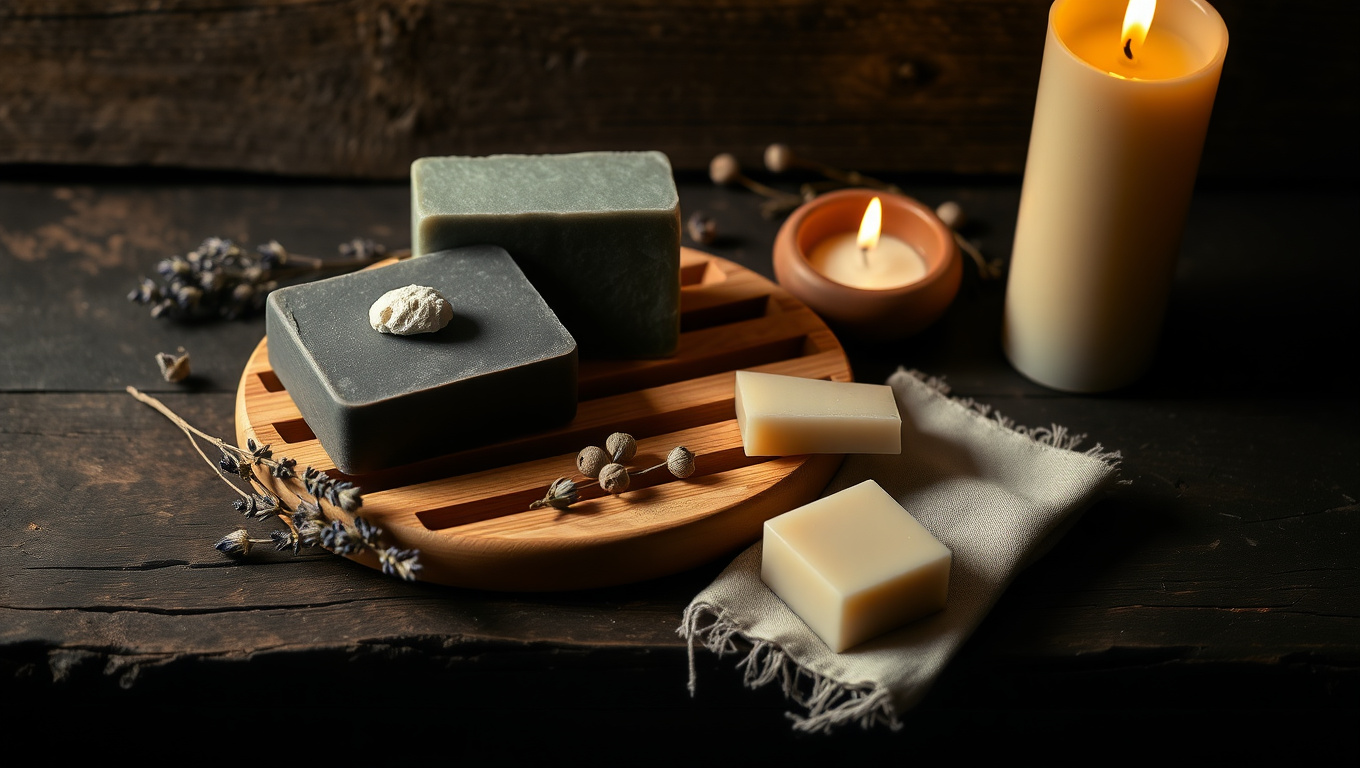
- A slatted wooden soap dish. The gaps allow water to drip away and air to circulate beneath the bar. Wood is a classic choice and works well in most showers and at the sink. Just make sure the dish itself gets a chance to dry out occasionally — wood that stays wet indefinitely can develop its own problems.
- A soap lift or soap saver mat. These are small ridged mats, often made of flexible recycled plastic or silicone, that hold the bar up off the dish surface. They work exceptionally well in showers where water pools.
- A loofah or natural sisal soap bag. Pop the bar inside and hang it from the showerhead or a hook. The bag holds the soap, lets it drain and dry, and gently exfoliates at the same time.
- A terra cotta or unglazed ceramic dish. The porous material absorbs excess moisture from the base of the bar and releases it slowly into the air. These are a quieter, more elegant option for a sink or vanity.
The goal is simple: after every use, the bar should be in contact with moving air, not standing water.
Storing Handmade Witch Soap When You’re Not Using It
If you’ve purchased multiple bars — say, you built a sample pack to try different ritual soap scents, or you stocked up for the season — proper storage matters. Handmade soap needs to breathe. Don’t seal it in an airtight container or a plastic bag for long-term storage. That traps humidity and can cause the bar to develop a film of soft, sticky glycerin on the surface (sometimes called “glycerin dew”), or in rare cases, to grow surface mold if conditions are humid enough.
The Best Way to Store Extra Bars
Keep unused bars somewhere cool, dry, and with reasonable airflow. A linen closet shelf, a wooden drawer with the bar wrapped loosely in paper or cloth, or even just an open shelf in a dry room works beautifully. Wrapping in breathable paper — kraft paper, tissue paper, even a square of natural cotton fabric — protects the surface from dust while still allowing air exchange.
Some people store their handmade soap bars in a lingerie drawer, which has the added benefit of gently scenting clothes and linens over time. A bar like Hecate’s Feline Friend, with its deep notes of cypress, cedarwood, and patchouli, can do wonderful things for a drawer of wool sweaters or a stack of linen towels.
Avoid storing soap near strong heat sources — a windowsill in direct sun, next to a radiator, or on top of a warm appliance. Heat can cause the oils in the bar to go rancid over time, particularly if the bar contains unsaturated oils like olive, sunflower, or sweet almond. A rancid bar will develop orange or brown spots (called “dreaded orange spot” in the soapmaking community) and an unpleasant smell. It won’t hurt you, but it’s not pleasant to use.
Kept properly, most well-formulated handmade soap bars will stay in good condition for a year or more, though for best scent and quality, using them within six to twelve months is generally ideal.
How to Use a Handmade Soap Bar Wisely
There’s no right or wrong way to use soap, but a few small habits can extend the life of a bar significantly.
Wet Your Hands First, Then the Bar
This sounds minor, but it helps. Wet your hands thoroughly before picking up the bar. Then give the bar a brief pass under the water and lather directly in your hands, rather than rubbing the bar against skin repeatedly. The less time the bar spends saturated, the slower it softens. Some people prefer to rub the bar onto a wet washcloth, loofah, or bath sponge, building a lather in the cloth and then setting the bar down. This keeps handling to a minimum and generates a rich, voluminous lather at the same time.
Let It Rest Between Uses
If two people in a household are both showering in the same space, the soap may not have enough time to dry out fully between uses. Consider keeping two bars in rotation — one in the shower, one resting and drying on a nearby shelf — and alternating them. Each bar gets time to firm back up before its next use. This one habit alone can nearly double the life of a bar.
Don’t Let It Sit in Shower Steam
The steam from a hot shower is almost as damaging as direct water contact. If your soap dish is sitting directly in the shower stall, it’s absorbing humidity even when nobody is touching it. If possible, place the soap dish outside the direct spray and steam zone — on a shelf above the showerhead, outside the glass door, or on the bathroom counter for sink-based use.
What to Do With Small Slivers and End Pieces
Every bar eventually reaches the sliver stage — that thin, fragile wafer that curls at the edges and is nearly impossible to hold onto. Most people toss it. There are better options.
- Press it onto a new bar. Wet both the sliver and the surface of a new bar, press them together firmly, and let them dry for a day or two. They’ll fuse into one piece. This only works while both bars are slightly soft from use — it won’t work with a bone-dry bar fresh from storage.
- Make a soap pouch. Drop slivers into a small mesh or muslin bag and use it as a scrubby bath pouch. Nothing goes to waste.
- Dissolve into liquid soap. Collect slivers in a jar, add a small amount of warm water, and let them break down slowly over several days with occasional stirring. The result is a rough but perfectly usable liquid hand soap.
- Tuck them in drawers. Small slivers that are too thin to use effectively still hold their scent for weeks. Tuck them into linen drawers, closets, or gym bags.
A Simple Ritual for Your First Use
If you’ve invested in a handmade witch soap with intention behind it — a ritual soap crafted for a full moon bath, a seasonal cleansing, or a practice of shadow work — the first use can be a small ritual in itself. This doesn’t need to be elaborate. Simple works better, honestly.
Before stepping into the bath or shower, hold the bar for a moment. Notice its weight. Smell it properly — bring it close, breathe in through your nose slowly, let the scent settle. Notice what it brings up. A bar like Shadow and Sage, with its notes of firewood, vetiver, and cedarwood, has a grounding, earthy quality that feels like standing still in a forest. Dark Alchemy, with myrrh, jasmine, rose, and black pepper woven through it, is something altogether different — richer, more complex, with a warmth that opens slowly.
Set a small intention for the wash. Nothing grand. Maybe it’s just: I’m washing away what today left on me. Or: I’m stepping into this evening with a clean slate. The ritual soap becomes a small anchor for that thought. Use it slowly. Let the lather sit for a moment. Then rinse.
After your bath or shower, place the bar on its draining dish somewhere you’ll see it. Let it dry completely before the next use. Treat it like something worth keeping — because it is.
Building a Full Moon Bath Ritual Around Your Soap
A full moon bath ritual is one of the simplest ways to bring intentional practice into an ordinary evening. You don’t need much. Fill the tub with warm water. Light a candle or two. Set your soap bar at the edge of the tub where you can reach it easily. If you have dried herbs, flower petals, or a handful of sea salt, add them to the water. Then get in, slow down, and let the ritual soap be part of how you close that lunar cycle.
Many people who practice moon ritual soap use find that the act of lathering slowly, of paying attention to the scent, of being fully present in the water, is more grounding than any formal ceremony. The soap is just a tool. A good one, made with care. But the stillness is yours to create.
Caring for Soaps With Crystal or Botanical Adornments
Several handmade ritual soaps — particularly those from small-batch makers — are topped with crystals, dried botanicals, or other adornments as part of their aesthetic and ritual identity. These are lovely, but they do require a tiny bit of attention.
Crystals set into the top of a bar are generally secure when the soap is dry, but they can loosen as the bar softens with use. Keep an eye on small embedded stones as the bar gets shorter, and set them aside once they start to work loose. Rinse them, let them dry, and keep them — they’re real stones, and they’re yours now.
Dried botanicals on the surface of a soap — flowers, herbs, or plant matter — will generally rinse away over the first few uses. This is normal. They’re decorative rather than functional, and they don’t affect the soap’s performance. Let them go gracefully.
Reading the Bar: What’s Normal and What Isn’t
Handmade natural soap can sometimes look a little different from bar to bar, and from day to day. Here’s a quick guide to what’s perfectly fine versus what signals a problem.
Completely Normal
- A white or slightly dusty surface on a new bar. This is called soda ash — it forms when unsaponified soap batter is exposed to air during the curing process. It’s purely cosmetic and rinses away with the first use.
- Slight variations in color between bars. Natural colorants like clays, botanicals, and micas behave differently batch to batch. Small variations are a sign of genuine handmade production.
- Soft spots on the base of a stored bar. If a bar was stored somewhere slightly humid, the base may feel softer than the interior. Let it air dry for a few days and it should firm back up.
- A change in the top layer’s color over time. Some natural colorants fade with UV exposure. If a bar has been sitting in a sunny window, the surface color may shift. The soap itself is unaffected.
Worth Noting
- Orange or brown spots. These are the dreaded orange spot mentioned earlier — a sign that some oils in the bar have begun to oxidize. The soap is still usable, but its shelf life is shortened. Use it sooner rather than later.
- An off or rancid smell. Similar cause — oxidized oils. This is more common in bars stored in warm, humid conditions or kept for longer than a year. Use it up or let it go.
- A slimy or overly soft bar that doesn’t recover after drying. If a bar has been sitting in water and has become thoroughly waterlogged, it may never fully recover its original texture. This is a loss, but an honest one — and a good reminder for next time.
Soap Care as Part of a Witchy Self-Care Practice
There’s something quietly satisfying about taking care of the things you love. Treating a beautiful handmade witch soap with a little intention — giving it a proper dish, letting it dry fully, using it slowly — is its own small act of mindfulness. It’s the same energy that goes into tending an herb garden, keeping a clean altar, or making a cup of tea the right way instead of the fast way.
Witchy self-care isn’t a category of products. It’s an orientation toward your own daily life — a willingness to slow down, pay attention, and find meaning in small acts. A ritual soap can be part of that, but only if you let it. Rushing through a shower with your bar sitting in a puddle isn’t the experience the maker intended when they poured that batch.
Let the bar be what it was made to be. Give it air. Give it time. Give your bathing practice a little more of your attention. The return is worth it.
Finding the Right Handmade Witch Soap for Your Practice
If you’re not sure where to start, or you want to try a few different scents and formulas before committing to a full bar, Spellbound Grove offers a free soap sample — one per customer, in your choice of scent and formula (regular or nut-free). It’s a genuinely good way to get your hands on the real thing before deciding what belongs in your bathroom.
There’s also a Build Your Sample Pack option, where you can choose two sample-sized bars from the collection — useful if you’re trying to decide between something deep and resinous like Dark Alchemy and something brighter and botanical like Hex and Honeysuckle, with its bergamot, frankincense, and honeysuckle layered together.
Once you know what calls to you, taking care of that bar properly means it will last — and it means the ritual has room to unfold the way you actually want it to. That’s the whole point, really. Good soap, well kept, used with a little presence. That’s enough to make an ordinary evening feel like something worth remembering.
If you’re ready to find a bar that fits your practice, explore the handcrafted ritual soaps and botanical bath goods at Spellbound Grove. Every bar is made in small batches, with real ingredients, and a little bit of something harder to name — the kind of care that shows up in the lather.