
The Ordinary Moment You Keep Overlooking
Most of us treat the shower as a transaction. Step in, get clean, step out. There’s nothing wrong with that, of course. But somewhere in the rush of it, we’ve stopped noticing one of the few moments each day that is genuinely, completely ours. No notifications. No one asking anything of us. Just warm water, steam, and a few uninterrupted minutes where the rest of the world goes quiet.
That’s the space that handmade witch soap was made for. Not as a gimmick or a costume, but as a real anchor — something you pick up, inhale, and let bring you back to yourself before the day takes over. When a bar of soap is made with intention, with real botanicals, and with care for how it smells and feels against skin, the act of using it becomes something different. Small, yes. But real.
This isn’t about turning your bathroom into an altar or spending forty minutes on an elaborate ceremony (though honestly, some evenings call for exactly that). It’s about the smaller shift: choosing presence over autopilot. Letting the scent of cedarwood or myrrh or blackberry actually land, rather than washing past you unnoticed. That’s where the magic is — not in anything esoteric, just in paying attention.
What Makes a Ritual Soap Different From Regular Soap
The word “ritual” gets used loosely these days, so it’s worth slowing down and asking what it actually means in the context of a soap bar. A ritual, in its oldest sense, is simply a repeated act done with awareness. The repetition matters. The awareness matters. The object you use can matter too, when it’s been made with those things in mind.
A small-batch ritual soap is different from a mass-produced bar in a few concrete ways. The base oils are chosen for how they feel and perform — shea butter for a creamy lather, coconut oil for cleansing power, olive oil for a bar that stays gentle. The botanicals, resins, and fragrance notes are chosen not just to smell pleasant but to evoke something: a season, a mood, an old folk association that stretches back centuries. And crucially, each bar is made in small enough quantities that the person making it can actually pay attention to what they’re doing.
That attentiveness transfers. It sounds a little woo, but it also just makes practical sense — when someone cares about what they’re making, the result is better. The scent is more considered. The texture is more intentional. The experience of using it is richer.
The Role of Scent in Grounding a Practice
Scent is one of the most immediate, least intellectual things we experience. Before the thinking brain catches up, a smell has already done its work — pulling up a memory, shifting a mood, changing the quality of a moment. This is why fragrance has been part of ritual practice across so many different cultures and time periods. Not magic in a supernatural sense, but in the very human sense that smell reaches us somewhere deep and quiet.
Patchouli has been used in folk and trade traditions for centuries, carried in fabric and incense across long distances. Frankincense has been burned in ceremonial contexts for thousands of years. Myrrh appears in ancient texts from multiple cultures. Lavender has a long history in European folk herbalism, tucked into sachets and used in cleaning rituals. These aren’t invented associations. They’re layered, accumulated meanings that a scent carries simply by being itself.
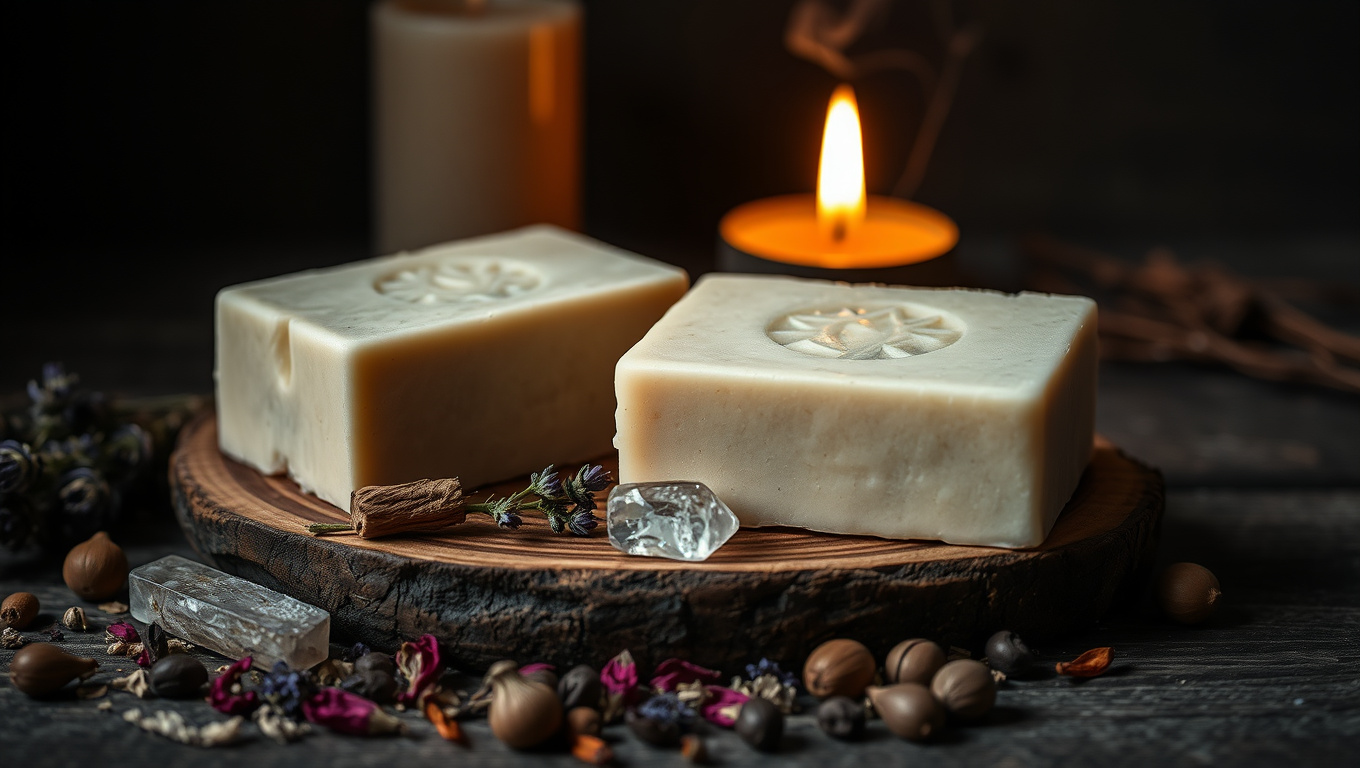
When you pick up a bar of Dark Alchemy — with its layered notes of myrrh, cypress, lavender, jasmine, rose, patchouli, cinnamon, and black pepper, finished with a piece of clear quartz — you’re not just smelling something pleasant. You’re drawing on a long lineage of botanical meaning, compressed into a moment of lather. That’s a genuinely interesting thing to hold in your hands.
Building Your Shower Ritual: No Grand Gestures Required
The best rituals are the ones you can actually keep. So start simple. You don’t need candles or crystals or a special playlist (though all of those are lovely additions if you want them). You need three things: a soap you genuinely love, a few seconds of intention before you step in, and the willingness to actually notice the experience while it’s happening.
Before You Step In
Take one breath before you turn on the water. That’s the whole thing. One breath, and a brief thought about what you’re bringing into this moment versus what you’d like to leave at the door. If you’re starting your day, maybe that’s an intention — one word is plenty. Grounded. Clear. Present. If you’re ending your day, maybe it’s simpler than that: just a quiet acknowledgment that the day is done, and this is where you let it go.
You don’t have to say it out loud or make it formal. This is an internal shift, not a performance. Some people light a single candle on the bathroom counter. Some just pause with their hand on the doorframe for a second. Find what works for you and make it consistent. Consistency is what transforms a nice gesture into an actual ritual.
In the Water: Let the Soap Do Some of the Work
This is where the soap really earns its place. Pick up the bar, hold it for a moment, and actually smell it before it hits the water. This sounds like a small thing, but it makes a difference. Scent experienced dry is different from scent in steam — both are worth noticing.
If you’re working through something heavy, or you’re at the kind of tired that goes past just needing sleep, a bar with deep grounding notes is worth reaching for. Shadow and Sage — built around vanilla, cedarwood, vetiver, firewood, and black obsidian — is one of those bars that feels suited to the ritual of release. There’s something in that smoky, rooted scent combination that makes the act of washing feel more like a reset than a routine. It’s the kind of bar people describe as their “before journaling” or “before divination” soap, not because of anything mystical in the ingredients themselves, but because the scent creates a clear sensory before-and-after.
For mornings when you need brightness rather than depth, something like Hex and Honeysuckle — bergamot, honeysuckle, frankincense, cinnamon leaf, and citrine — has that early-light quality. Bergamot is a citrus with a slightly floral edge, often associated in folk tradition with clarity and fresh starts. Paired with the warmth of cinnamon leaf and the depth of frankincense, it’s a combination that wakes you up without being sharp about it.
The Shadow Work Shower: A Simple Practice for Difficult Days
Shadow work — the practice of sitting with the parts of yourself you’d rather not look at — doesn’t have to happen at a desk with a journal. It can begin in the shower. If you’re drawn to this practice, try this: as you lather up, consciously name something you’re releasing. Not out loud, necessarily. Just internally. A resentment you’ve been carrying. A version of yourself you’ve outgrown. A story about who you are that isn’t quite true anymore.
As you rinse, let it go with the water. Simple. Almost embarrassingly simple. But there’s something about the physicality of washing, the literal act of rinsing something off, that makes this feel more concrete than just thinking about letting go. The soap grounds the practice. The water carries it away. You step out clean in more than one sense of the word.
The Full Moon Bath Ritual: When You Have More Time
Shower rituals are for everyday life. But once in a while — around the full moon, at a seasonal turning point, or just when you genuinely have an evening to spare — a full ritual bath is worth building around. The full moon has long been associated in folk tradition with completion, release, and reflection. It’s a natural calendar marker, visible to everyone regardless of tradition or belief, and it makes a good anchor for a slower, more intentional practice.
Run a bath warmer than you’d normally manage. Add salts if you have them — plain Epsom or sea salt works fine. Light a candle. Put your phone in another room. Then choose your soap with some thought: what does this particular moon mean for you? What are you completing, or releasing, or honoring?
The Triple Moon Goddess bar — lavender, frankincense, myrrh, vanilla, and amethyst — was genuinely crafted for this kind of moment. The scent is soft and powdery, with the ancient warmth of frankincense and myrrh grounding the sweetness of lavender and vanilla. It’s the kind of bar that smells like it belongs in a ritual, because it was made with that in mind.
Stay in the water until it starts to cool. Don’t rush. Let the candlelight do something. When you get out, dry off slowly and notice how you feel. Often there’s a real difference — a quietness that wasn’t there before. That’s not magic in any dramatic sense. It’s just what happens when you give yourself an hour of genuine stillness.
Choosing the Right Handmade Witch Soap for Your Practice
This is more personal than it might seem. Scent is the most subjective sense we have, and the “right” soap for your ritual is largely a matter of what resonates with you specifically. That said, there are a few things worth considering.
Match the Mood, Not Just the Label
Don’t choose a soap based solely on its name or its associated deity or theme. Smell it first, or read the scent notes carefully and think about whether those notes feel right for what you’re building. If you’re drawn to dark, resinous, woody scents, something with patchouli, cedarwood, or vetiver will suit you. If you lean toward floral and warm, jasmine, ylang ylang, and vanilla are your terrain. If you want something seasonal and grounded in the turning of the year, look for bars built around harvest spices, smoke, or autumn botanicals.
Consider the Season
Seasonal living is one of the oldest forms of ritual there is. What we burn, what we eat, what we wear, what we smell — these things have always tracked with the season. There’s a reason pumpkin spice and woodsmoke feel like comfort in October, and there’s no reason your soap shouldn’t reflect that too. Small-batch ritual soaps made with seasonal intention carry that meaning naturally — they’re formulated at a particular time of year, with that season’s energies in mind.
Care for Your Bar So It Lasts
Handmade natural soap bars don’t contain the same hardening agents as commercial bars, which means they need a little more care. Keep your bar on a well-draining soap dish between uses so it can dry out fully. Don’t let it sit in standing water — that’s the fastest way to shorten its life. If you have more than one bar (which, honestly, is the natural progression), let extras cure in a cool, dry place out of direct sunlight. They’ll last longer and smell better for it.
Why the Daily Practice Matters More Than the Grand Occasion
There’s a tendency in witchy and ritual-adjacent communities to focus heavily on the big occasions — the full moons, the sabbats, the elaborate ceremonies. Those have real value. But in folk tradition, the everyday act has always mattered just as much. The charm spoken over bread. The bundle of herbs hung by the door. The careful way someone washes their hands before sitting down to important work.
The daily shower ritual is that kind of practice. Small, repeatable, woven into something you’re already doing anyway. That’s the real power of a good handmade witch soap — not that it does something miraculous on its own, but that it gives you a consistent, sensory anchor for showing up to your own life with a little more presence.
Over time, that adds up. The scent you reach for every morning before a big day becomes associated with steadiness. The bar you use on difficult evenings becomes associated with release. You’re building a personal vocabulary of sensation and meaning, quietly, one lather at a time.
Finding the Right Bar for Your Ritual With Handmade Witch Soap
If you’ve never tried a small-batch ritual soap before, starting with a sample is the most sensible thing you can do. Scent is too personal to guess at, and a sample lets you actually experience the lather, the longevity, and the way the fragrance behaves in steam before you commit to a full bar.
Spellbound Grove offers a free soap sample — one bar, your choice of scent, available in regular or nut-free formula. It’s a low-stakes way to figure out which direction your ritual wants to go before you build anything further around it. And if you already know what you’re after, or you want to explore the full range of seasonal, goddess, and botanical bars, you can browse the handcrafted soaps at Spellbound Grove and find a bar that actually fits your practice.
Handmade witch soap doesn’t ask you to believe in anything in particular. It just asks you to slow down, pay attention, and let a good scent do what scent has always done — bring you back to the moment you’re actually in. That’s a ritual worth keeping.