
Why Handmade Witch Soap Feels Different From Mass-Produced Soap
Pick up a bar of handmade witch soap and you notice it immediately. The weight is different. The smell is different — layered, warm, and somehow specific in a way that drugstore soap never quite manages. Even the surface of it is different, slightly irregular, matte and soft rather than glossy and stamped. Something happened here that didn’t happen in a factory. This article is about what that something is, why it matters to your skin, and why ritual soap made by hand carries a kind of meaning that mass production simply cannot replicate.
Most of us grew up with commercial soap bars. They were just there — in the shower caddy, next to the sink, wrapped in crinkly paper. We didn’t think much about them. But once you make the switch to a small-batch, botanically crafted bar, going back feels like a step in the wrong direction. The commercial bar suddenly seems harsh, the scent thin and synthetic, the lather oddly watery. The difference isn’t imagined. It’s real, and it starts with chemistry.
It also starts with intention — which, if you are drawn to witchy self-care, seasonal living, or folk herbalism, probably doesn’t surprise you at all.
The Chemistry: What Mass-Produced Soap Actually Is
True soap is made through a process called saponification, in which fats or oils are combined with an alkali — traditionally lye, also known as sodium hydroxide — and the two substances chemically transform into soap and glycerin. That glycerin is important. It’s a naturally occurring byproduct of the soapmaking process and it’s genuinely good for skin. It draws moisture from the air and helps the skin retain its own moisture.
Here’s the catch: large commercial soap manufacturers typically remove the glycerin from their soap and sell it separately to the cosmetics industry, where it’s used in lotions, creams, and other products. What’s left gets pressed into bars, loaded with synthetic surfactants, detergents, lather boosters, preservatives, and artificial fragrance, then sold as “soap.” Some of it isn’t technically soap at all under FDA definitions — it’s classified as a detergent bar or a “beauty bar.”
Small-batch, handmade soap keeps the glycerin in. The whole bar. And that makes a noticeable difference in how your skin feels after washing.
Cold Process vs. Hot Process: The Two Main Handmade Methods
If you’ve spent any time reading about natural handmade soap, you’ve probably come across the terms “cold process” and “hot process.” Both start with the same fundamental chemistry — oils plus lye — but they handle the saponification differently.
Cold process soap is made by combining the oils and lye solution at a relatively low temperature, pouring the mixture into molds, and then letting it cure, usually for four to six weeks. During that curing period, the saponification completes slowly, excess water evaporates, and the bar hardens into something dense, mild, and long-lasting. This is the most common method used by small-batch soapmakers, and it’s what most handcrafted soaps — including the ritual bars from Spellbound Grove — are built on.
Hot process soap uses external heat to speed up saponification. The result is a bar that can be used more quickly, though it tends to have a rougher, more rustic texture. Both methods preserve the glycerin. Both are genuinely different from what comes out of an industrial soap line.
The Role of Oils: Why What Goes In Matters
Commercial soap is often made with whatever fats and oils are cheapest and most available. Small-batch soapmakers make deliberate choices. The combination of oils used in a bar determines how it lathers, how firm it is, how long it lasts, and how it feels on the skin.
Olive oil makes a bar that is gentle and long-lasting with a creamy, conditioning lather. Coconut oil contributes a big, bubbly lather and hardness. Castor oil, used in small amounts, boosts lather and helps bind the bar. Shea butter adds richness. Sweet almond oil is soft and light. Every handmade soapmaker develops their own base recipe, their own balance of oils — and that balance is a genuine craft decision, not a formula dictated by what’s cheapest to source.
When you pick up a bar from a small maker, you’re picking up the result of real decisions. Someone chose those oils. Someone figured out that ratio. It matters.
Fragrance: Essential Oils vs. Synthetic Blends
Scent is one of the most immediately noticeable differences between handmade and mass-produced soap. Commercial bars are almost always scented with synthetic fragrance oils — lab-created compounds that are engineered to smell bold and consistent. They do smell consistent. But there’s a flatness to them, a one-note quality, and for many people they’re irritating to sensitive skin.
Handmade soapmakers often work with essential oils — steam-distilled or cold-pressed plant extracts — as well as carefully chosen fragrance blends that include genuine botanical components. The scent of a well-made handmade bar evolves. It’s more complex. It has top notes and base notes. It smells like something that came from an actual plant rather than a lab beaker.
This is especially true of ritual soap designed with folk herbal traditions in mind. Cypress, patchouli, cedarwood, myrrh, clary sage — these are not just scent names on a label. They are plants with long histories in folk practice, in ceremony, in the kind of slow, thoughtful living that witchy and cottagecore communities are drawn to. Their scents are multilayered in a way synthetic copies rarely manage to be.
What Makes a Soap “Ritual” — And Why It’s Not Just Marketing
The word “ritual” gets used a lot, sometimes carelessly. But when it comes to handmade witch soap and the broader tradition of ritual self-care, there’s genuine substance behind it.
Humans have used bathing as a ceremonial act for as long as we have recorded history. Across cultures and time periods, water has been associated with purification, transition, and spiritual preparation. The idea of washing as more than hygiene — as a moment of intention, a threshold between one state of being and another — is old. It’s in folk practice from Eastern Europe to West Africa to Indigenous American traditions to the Roman bathhouse. The specific forms differ enormously, but the instinct is remarkably consistent.
When you reach for a bar of small-batch ritual soap and bring it into a deliberately set-aside bath — candles lit, music chosen, phone put away — you are tapping into something that resonates because it’s ancient. The soap itself becomes a focus point for that intention. What’s in it, how it smells, what it’s named for — all of that becomes part of the experience.
That’s not gimmickry. That’s folk practice applied to modern self-care. And it works best when the soap itself is genuinely made with care, not stamped out by the million.
Crystals, Botanicals, and Adornments in Handmade Soap
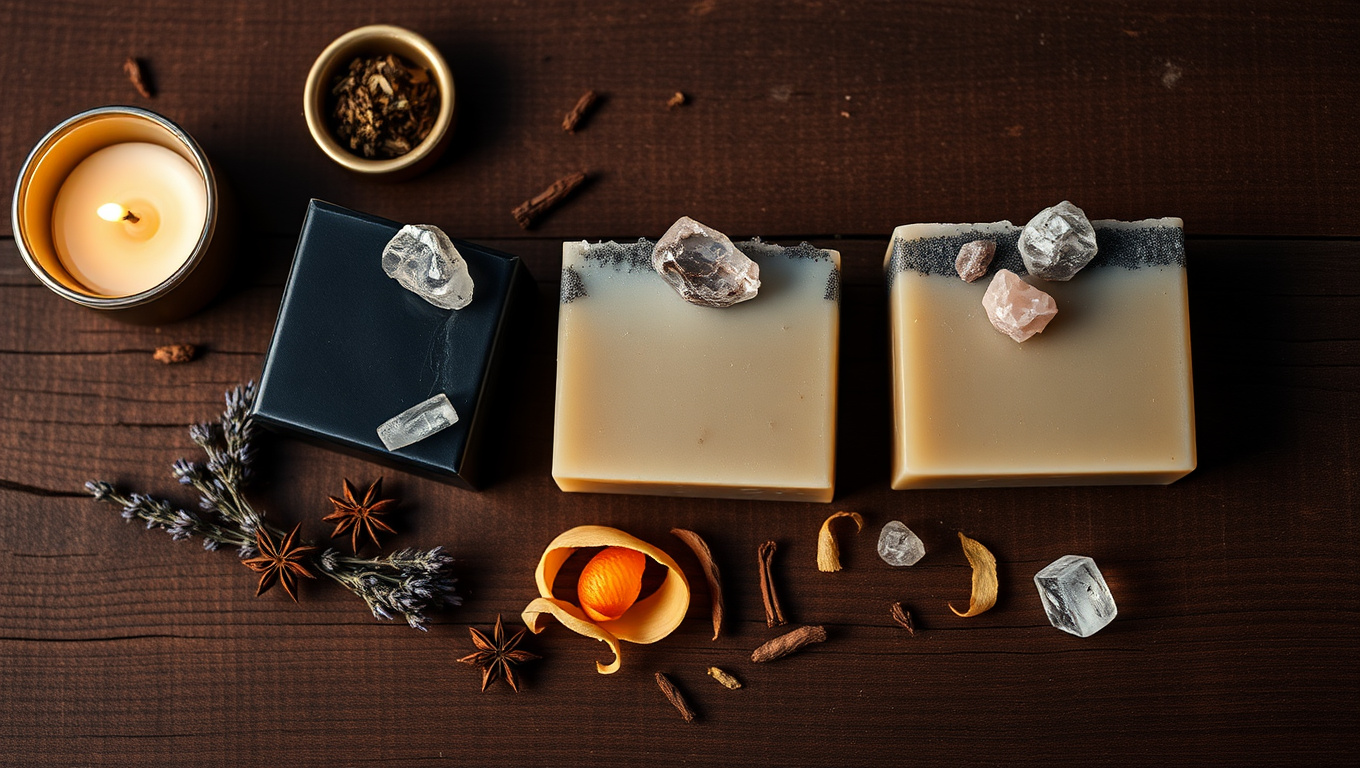
Many small-batch ritual soaps include additional elements — a piece of crystal placed on top, a dried botanical pressed into the surface, a swirl of color inspired by the lunar calendar or a particular deity. These aren’t just decorative choices, though they are genuinely beautiful. They reflect the maker’s intention and the specific character of each bar.
A black obsidian adornment on a dark, smoky bar signals something different than a rose quartz on a soft, floral one. A piece of clear quartz on a complex, multi-note bar suggests clarity and focus. These are visual and tactile cues that deepen the experience of using the soap — they invite you to slow down and actually notice what you’re holding.
Mass-produced soap is not designed to be noticed. It’s designed to disappear into your routine. Handmade soap invites the opposite.
The Sensory Experience: What You Actually Feel in the Shower
Beyond chemistry and intention, there’s the simple, immediate reality of how a handmade bar feels in your hand.
Good handmade soap lathers differently. It tends to produce a creamier, more moisturizing lather rather than the aggressive, stripping foam of a detergent bar. Your skin after a handmade soap rinse tends to feel softer and less tight — not because of added moisturizers applied on top, but because the glycerin that belongs there was never removed in the first place.
The scent experience is also different. Synthetic fragrance tends to hit hard and fade fast. A bar scented with essential oils and botanical blends fills the shower with something that unfolds more slowly — the top notes first, then the warmer base notes as the steam rises. It’s genuinely pleasant in a different, less aggressive way.
And then there is the look of a handmade bar. The swirls in the soap, the slight irregularity, the crystal sitting on top, the weight of it — these things register. They make washing your hands or stepping into the bath feel like an occasion rather than a task.
Choosing a Handmade Ritual Soap: What to Look For
If you’re new to handmade soap or looking to be more intentional about what you choose, here are a few things worth paying attention to.
Read the Ingredient List
A genuine cold-process soap will list saponified oils — saponified olive oil, saponified coconut oil, and so on — or will list the oils and sodium hydroxide separately. If the first few ingredients are sodium lauryl sulfate, sodium laureth sulfate, or other synthetic detergents, it’s not traditional handmade soap. That doesn’t automatically make it bad, but it’s useful to know what you’re working with.
Consider the Scent Profile and Its Origins
Think about what you want from the experience. Some people are drawn to earthy, grounding scents — patchouli, cedarwood, vetiver. Others prefer something lighter and floral. Some want something that smells like autumn — spiced, warm, a little smoky. Let the scent notes guide you toward a bar that suits your current season or mood.
For example, the Dark Alchemy ritual soap from Spellbound Grove layers myrrh, cypress, lavender, jasmine, rose, patchouli, cinnamon, and black pepper into something genuinely complex — earthy and floral at once, with a warmth that lingers in the steam. It’s topped with a piece of clear quartz. A bar like that isn’t something you grab without thinking. You choose it.
If you’re drawn to something rooted in folk tradition around Hecate — the Greek goddess associated with crossroads, the moon, and the liminal — the Goddess Hecate natural handmade soap brings together myrrh, cypress, lavender, jasmine, amber, and rose, and is dressed with a small antique key. The scent is lush and slightly resinous, with an old-world character that suits a moonlit bath or a quiet evening ritual.
Think About the Season
One of the pleasures of small-batch soapmaking is that makers often work seasonally. A soap made for Samhain will smell different from one made for Beltane. Choosing a bar that fits your current season deepens the connection to the rhythms of the year, which is at the heart of a lot of witchy and folk herbalism practice.
The Hollow Night handmade witch ritual soap is a good example — pumpkin cider, mulled cider, chocolate amber, and burning sandalwood, adorned with black obsidian. It smells unmistakably like the turning of the year toward darkness, like a fire burning down at the end of October. Using a bar like that in a Samhain bath isn’t pretentious or performative. It’s simply choosing to mark the season with your senses.
A Simple Ritual for Getting More From Your Handmade Soap
You don’t need elaborate tools or a specific tradition to build a meaningful ritual around your handmade soap. Here is a simple approach that works with whatever bar you have on hand.
Before you step into the bath or shower: Take a moment to hold the bar. Smell it. Notice what it makes you think of or feel. Let that be your entry point into the ritual rather than going in distracted and on autopilot.
Set a simple intention: This doesn’t have to be dramatic or mystical. It can be as simple as “I want to feel more like myself” or “I’m washing away the stress of this week.” The specificity of the intention is what makes it feel like a ritual rather than just personal hygiene.
Slow down the lather: Take your time working the soap into a lather. Notice the texture, the scent rising with the warmth of the water, the weight of the bar. This kind of deliberate sensory attention is, in a real sense, a form of mindfulness — and it’s the same instinct that drives folk traditions of ceremonial bathing.
Let the rinse be part of it: If your intention was to release something — a hard week, an anxious thought pattern, an energy you’ve been carrying around — let the rinse carry it away. This is deeply symbolic, and human beings have used this symbolism across cultures for a very long time.
Dry off slowly: Pat rather than scrub. Give the glycerin in your handmade soap a chance to do its work. Notice how your skin feels. It should feel soft and comfortable, not stripped or tight.
That’s the whole ritual. It doesn’t require anything special except a good bar of soap and the willingness to actually pay attention to what you’re doing.
Why Small-Batch Matters Beyond the Soap Itself
There’s one more dimension to the difference between handmade and mass-produced soap, and it has nothing to do with chemistry or ritual. It’s simply this: when you buy from a small-batch maker, you’re supporting a real person doing real work.
Handmade soapmaking is labor-intensive. The oils have to be measured carefully. The lye solution has to be handled with respect. The batch has to be mixed, poured, cut, and cured over weeks. Every bar has been touched many times by human hands before it reaches you. That is genuinely different from a bar that came off an industrial line in a factory making hundreds of thousands of units a day.
When a small maker puts a crystal on top of a bar or names it after a goddess or designs a scent profile around a particular moon phase, they’re making choices that mean something to them — and that care comes through. You can feel it in the soap.
The Conclusion: Handmade Witch Soap Is Worth the Attention
There are real, tangible reasons why handmade witch soap feels different — the retained glycerin, the deliberate oil choices, the complexity of genuine botanical scent, the density and longevity of a properly cured bar. These aren’t placebo effects or clever branding. They’re the results of a different process, done with different priorities.
And then there’s the layer that goes beyond chemistry. The intention behind a ritual soap, the folk history of ceremonial bathing, the simple act of choosing a bar because it smells like something that matters to you right now — all of that is real too, in its own way. It’s the reason handmade soap has become something people seek out rather than something they just grab off a shelf.
If you’ve been curious but haven’t yet made the switch, or if you’re looking to add something new to your witchy self-care practice, it might be worth starting small. Spellbound Grove offers a free handmade soap sample — one bar, your choice of scent, no commitment required. It’s the easiest way to feel the difference for yourself before investing in a full bar.
When you’re ready to go further, explore the full collection of handcrafted soaps and botanical bath goods at Spellbound Grove. Every bar is made in small batches, with real ingredients and real care. That’s not a promise we make lightly — it’s just how the work gets done.