
Why Handmade Witch Soap Takes Time — And Why That Matters
Pick up a bar of handmade witch soap and you’re holding something that took weeks to become what it is. Not hours. Weeks. That might seem like an odd thing to say about something you use in the shower, but it’s one of the truest things about the craft. The slow process isn’t a limitation — it’s part of what makes handmade soap genuinely different from the mass-produced bars lining most store shelves. When you understand why it takes so long, the soap in your hand starts to feel like what it actually is: something made with care, patience, and a real understanding of the materials.
This is a look inside that process — the chemistry, the botany, the waiting, and the intention behind every small-batch ritual soap we make at Spellbound Grove. Whether you’re new to handmade soap or you’ve been reaching for natural bars for years, there’s something satisfying about knowing what went into it before it ever reached you.
It Starts With Oils — And the Chemistry That Transforms Them
Soap is, at its most basic, the product of a chemical reaction between oils or fats and an alkali — usually sodium hydroxide, which most people know as lye. That reaction is called saponification, and it’s been understood in various forms for thousands of years. What comes out the other side isn’t lye and it isn’t raw oil. It’s soap — a completely different substance with its own properties, texture, and feel.
The oils you start with matter enormously. Different oils produce different qualities in the finished bar. Some contribute a hard, long-lasting structure. Others bring a rich, creamy lather. Some add conditioning properties that leave skin feeling soft after rinsing. A well-formulated soap recipe balances all of these things. That balance takes real knowledge — and often years of practice to get right.
Why the Oil Blend Is Never Random
In small-batch handcrafted soap, the oil selection is a deliberate choice. A maker who cares about their craft thinks about how each oil behaves — how quickly it traces in the pot, how it affects the final bar’s hardness, how it interacts with botanical additions like clays, herbs, or fragrance materials. There’s no shortcut to this knowledge. It comes from making batch after batch and paying close attention.
When fragrance materials enter the equation — essential oils, botanical extracts, or carefully chosen fragrance blends like the cypress and patchouli in our Hecate’s Feline Friend — the soapmaker has to account for how those materials behave in a high-pH environment. Some accelerate the trace dramatically, giving you minutes instead of the usual window to work with the batter. Some cause ricing or seizing. Knowing your materials, and working in small, controlled batches, is the only way to manage that well.
The Cure: Why Handmade Soap Has to Wait
After a batch of cold-process soap is poured into the mold, the saponification reaction continues for roughly 24 to 48 hours. The bars are cut, and then — they wait. A minimum cure of four weeks is standard for most cold-process natural soap bars, and many soapmakers prefer six weeks or longer for certain formulations.
This isn’t an arbitrary timeline. During the cure, water evaporates out of the bars slowly and evenly. The result is a harder, longer-lasting bar with a smoother lather. A soap that hasn’t cured fully will feel soft, will dissolve quickly in the shower, and won’t perform the way a properly cured bar does. Rushing it doesn’t work. The chemistry has its own schedule.
What Happens During Those Weeks
Curing is quiet work. The bars sit on wooden racks in a cool, well-ventilated space, usually turned at intervals to ensure even drying. The soapmaker checks on them — watching for any sign of a lye-heavy pocket, which would appear as white, powdery ash or an unusually soft spot, or for glycerin rivers, which are translucent streaks that form from the natural glycerin produced during saponification. These aren’t defects so much as signs of a handmade process, but a careful maker watches for anything that suggests a batch needs attention.
Natural glycerin, by the way, is something worth noting. It’s a byproduct of saponification that remains in handmade soap and contributes to that soft, cushioned feeling during use. Many commercial soap manufacturers remove the glycerin from their bars to use elsewhere in lotions and cosmetics. In handmade soap, it stays right where it formed.
Botanical Additions and the Art of Getting Them Right
Herbs, clays, botanicals, and natural colorants are some of the most appealing aspects of a handcrafted ritual soap. They’re also some of the most unpredictable. The high-pH environment of raw soap batter is hard on plant materials. Dried flowers that look beautiful on top of a bar can turn brown or tan over time as they oxidize. Some plant-based colorants fade. Others morph into entirely different shades during saponification.
This is one of the reasons experienced small-batch soapmakers get to know their ingredients so personally. You learn which botanicals hold their color and which don’t. You learn that some herbs are better infused into the oils before soapmaking, lending their properties to the base without the visual unpredictability. You learn that what looks stunning in the pot doesn’t always look the same after six weeks on a curing rack — and you adjust your expectations and your recipes accordingly.
Fragrance in Small-Batch Ritual Soap
Scent is one of the most immediate, sensory things about a ritual soap. It’s often what draws someone to a bar before they’ve even read the label. The deep, earthy pull of patchouli. The resinous warmth of myrrh. The way frankincense settles something in the chest before a quiet evening ritual.
Blending fragrance for handmade soap is its own discipline. Essential oils and fragrance blends have to be used at appropriate usage rates — enough to survive saponification and curing and still be present in the finished bar, but not so much that the soap becomes irritating or unstable. Some fragrance materials behave beautifully in soap. Others are notoriously difficult — ricing the batter, seizing in the pot, or fading completely after cure. Learning to work with fragrance takes time, trial, and a lot of careful note-taking.
Our Dark Alchemy bar carries notes of myrrh, cypress, lavender, jasmine, rose, patchouli, cinnamon, and black pepper — a layered blend that was developed and tested carefully to ensure those notes hold through the full curing process and show up in a real, lasting way when you lather.
Small Batches and Why Size Is Part of the Craft
Making soap in small batches isn’t a marketing decision. It’s a quality decision. When you’re working with natural ingredients, managing a complex formula, and paying attention to every variable, smaller batches give you control. You can monitor the temperature of your oils and lye solution more accurately. You can respond quickly if the batter starts to behave unexpectedly. You can check individual bars during curing and catch any issues early.
Small batches also mean that each pour gets full attention. There’s no autopilot. A soapmaker working with a 10-bar batch has a fundamentally different relationship to that soap than someone running a production line. That attention isn’t romantic mythology — it has practical effects on the finished product.
Adornments and Finishing Touches
Many Spellbound Grove soaps include a crystal or stone adornment set into the top of the bar — a piece of black obsidian, a shard of clear quartz, a tumbled piece of rose quartz. These are placed by hand, one bar at a time, before the soap sets. It’s a small act, but it requires being present with each individual bar. No machine does it. No process shortcut replaces it.
These adornments are part of the ritual identity of the soap — a visual anchor that carries meaning for those who work with stones and crystals in their practice. The Moonlit Cauldron bar, for example, carries a piece of white howlite and opens with the soft, round scent of blackberry and chamomile — a combination that feels genuinely made for a slow evening bath, not an afterthought.
Building a Simple Ritual Around Your Soap
Once you understand what went into the bar, using it differently comes naturally. A handcrafted ritual soap can be a small but grounding part of a daily practice — not a complicated ceremony, just a moment of intention in an otherwise ordinary routine.
Here are a few ways to bring more presence to that moment:
- Before a bath or shower, hold the bar for a moment. Notice the scent before the water even runs. Let it be a signal to your senses that the next few minutes belong to you.
- Work up a lather slowly. Handmade soap has a different quality of lather than commercial bars — often creamier, softer, more textured. Give it a moment to develop instead of rushing past it.
- Set an intention, however small. A full moon bath ritual doesn’t require an altar and a formal practice. It can simply be a quiet decision: tonight I’m washing off the week. Tonight I’m starting fresh. The soap becomes a tactile marker for that moment.
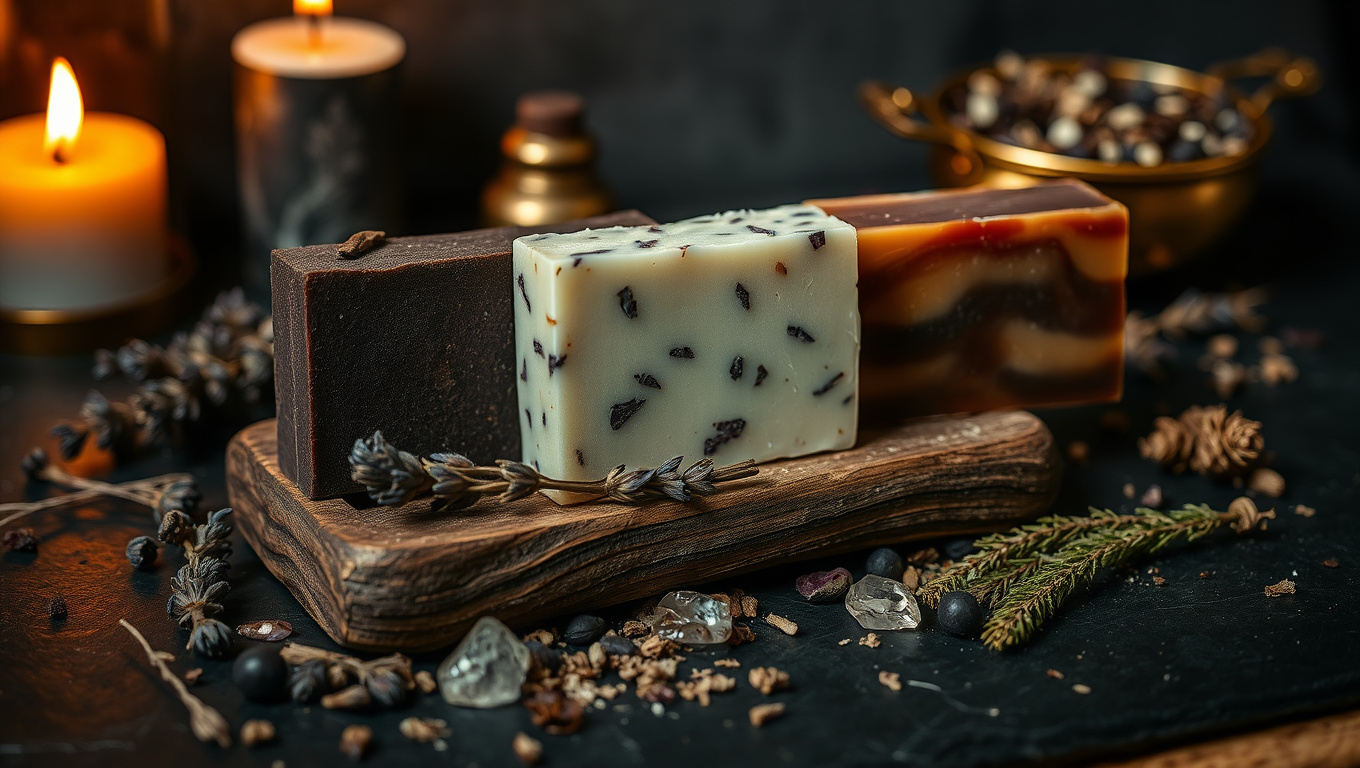
- Keep the bar dry between uses. This is practical as much as ritual. Handmade soap lasts significantly longer when it’s allowed to dry between uses. A wooden soap dish that allows drainage is ideal. It also looks beautiful — there’s something genuinely satisfying about a well-kept bar sitting on a wooden tray with a few sprigs of dried botanicals nearby.
- Use the curing as a reminder. If you order a bar and it arrives perfectly cured, remember that someone waited for it — checked on it, turned it, gave it time. That patience is in the bar you’re holding. It’s not a small thing.
The Lore of Cleansing: Why Ritual Soap Has Roots
The idea of washing as more than physical hygiene has roots in folk traditions across many cultures. Water and cleansing have long been associated with transitions — the end of one thing, the beginning of another. Salt water, spring water, rain — the specific element mattered, as did the herbs used to prepare it. Many folk practices involved washing with botanically prepared water before or after significant moments: before a journey, after a loss, at the turning of a season.
Handmade soap in a witchy, folk-herbalism tradition is a natural extension of that sensibility. It isn’t about magical claims or supernatural effects. It’s about using scent, touch, and ritual intention to mark a moment in time. To say: this is where the day ends, or this is where something new begins. The soap is a tool for presence, not a spell — unless you make it one, which is entirely your prerogative.
A Samhain-season bar like Hollow Night — with its notes of pumpkin cider, chocolate amber, and smoky sandalwood — is an example of soap that speaks directly to seasonal folk tradition. The scent itself carries the feeling of the year’s turning, of harvest done and dark months beginning. You don’t need to perform any ritual with it. The smell alone does quiet, sensory work.
Why Patience in the Making Translates to the Using
There’s something that happens when you know a thing took time to make. You use it differently. You notice it more. You’re less likely to leave it sitting in a puddle of water, or to use it carelessly, or to forget about it entirely until the bar is half-gone and unremarkable. The attention that went into making it tends to come back out in how it’s received.
This is true of most handmade things — bread, candles, clothing, pottery. The time embedded in an object isn’t invisible. You can feel it, even if you can’t articulate exactly why. A bar of small-batch ritual soap has weeks of work and waiting in it. That’s not poetic exaggeration. That’s the actual timeline of the craft.
At Spellbound Grove, every bar goes through that full process — the careful oil formulation, the small-batch pour, the weeks of curing, the hand-placed adornments. Not because it’s the fast way, but because it’s the right way. If you’ve never tried a properly cured, small-batch handmade witch soap, the difference in feel and lather is genuinely noticeable from the first use.
Finding the Bar That Fits Your Practice
Choosing a handmade witch soap doesn’t have to be complicated. Start with scent — it’s the most immediate and personal thing. Think about what season you’re in, what mood you’re after, what feeling you want to carry into or out of your day. A dark, resinous bar suits different moments than a bright, floral one. A smoky, grounding scent serves different energy than something soft and citrus-warmed.
If you’re new to Spellbound Grove’s soaps and not sure where to start, there’s a free soap sample available — one per customer, in your choice of scent, with a regular or nut-free option. It’s a small piece of the process made available without commitment, which feels like the right way to introduce a handmade thing to someone new.
Or if you want to try more than one scent side by side, the Build Your Sample Pack lets you choose two sample-sized bars from across the collection. A practical way to find out which scent actually calls to you before committing to a full bar.
A Final Word on Time Well Spent
We live in a moment when most things are made fast and sold faster. Handmade witch soap sits deliberately outside that. It asks for time — from the maker and, in a smaller way, from the person who uses it. A few minutes of unhurried attention in the shower. A little care with how the bar is stored. A moment of noticing the scent before the water washes it away.
That’s not a burden. It’s an invitation. The weeks in the curing rack, the careful oil blends, the hand-pressed crystal on top — all of it is pointing toward a single moment when the bar meets your hands and the scent opens up and you’re briefly, genuinely present. That’s what a good ritual soap can do. And that’s worth every day of the wait.
If you’d like to find a bar that fits your practice, your season, or simply your sense of smell, explore the handcrafted soaps at Spellbound Grove. Everything is made in small batches, cured with patience, and sent out with the hope that it finds exactly the right hands.